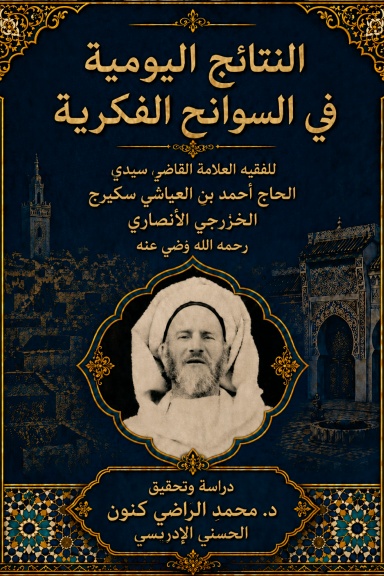
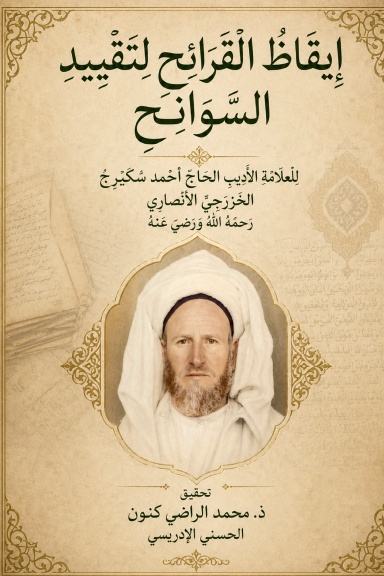
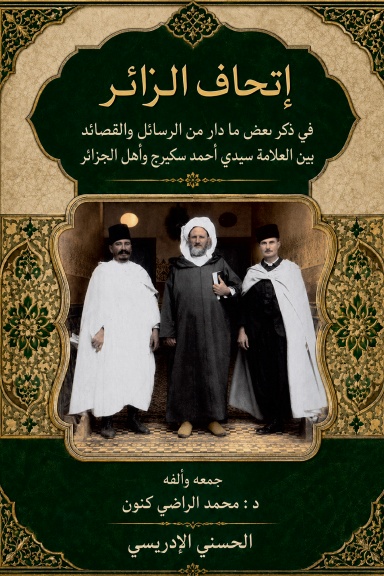
Skiredj Library of Tijani Studies
In the name of Allah, the Most Merciful, the Especially Merciful. May Allah send blessings and peace upon our master Muhammad, his family, and his companions.
Among the important writings of the great scholar and knower of Allah, Sidi Ahmed ibn al-Hajj al-Ayyashi Skiredj al-Khazraji al-Ansari, is a work known as Risalat al-Balagh, a letter directed to the muqaddam Sidi Abd al-Aziz al-Dabbagh. This text is not simply a personal letter. In its proper sense, it is also a spiritual authorization and a significant document in the history of Tijani transmission.
For readers interested in Sidi Ahmed Skiredj books, Tijani ijaza texts, and the rules of authorization in the Tijani path, this work offers both historical value and practical insight.
Who Was Sidi Abd al-Aziz al-Dabbagh?
The recipient of this letter was the scholar, man of letters, and muqaddam Sidi Abd al-Aziz al-Dabbagh ibn al-Shaykh Sidi Muhammad ibn Abd Allah al-Majid, from Omdurman in Sudan.
He was among the distinguished muqaddams considered qualified to transmit the awrad of the Ahmadi-Tijani path in that region. The relationship between him and Sidi Ahmed Skiredj was strong and deeply rooted. He was not only a disciple, but also a close companion, trusted student, and respected correspondent.
The source text makes clear that many letters and responses passed between them. In fact, their correspondence was so substantial that, if collected, it would fill a large volume on its own.
More Than a Letter: A True Tijani Authorization
Although the text is presented as a letter, it is more accurately understood as an ijaza, or authorization. That distinction matters. In the Tijani tradition, authorization is never treated lightly. It concerns responsibility, trust, knowledge, spiritual discipline, and the safeguarding of the path.
This is what gives Risalat al-Balagh its importance. It is not merely ceremonial. It reflects how a major Tijani authority viewed the transmission of the path and the qualities required for those entrusted with it.
A Striking Example of Skiredj’s Humility
One of the most remarkable features of this text is the humility of Sidi Ahmed Skiredj himself. The source emphasizes that, true to his habit, he presented himself as falling short of the level that would normally qualify him to authorize great men of knowledge among the disciples of this noble path.
This humility is one of the strongest lessons of the work.
Rather than magnifying himself, Skiredj expressed:
spiritual modesty
inward brokenness before Allah
caution about the weight of authorization
reluctance to claim worthiness for a role of such seriousness
The text contrasts this noble attitude with later situations in which some people distributed authorizations carelessly, handing them out broadly and without due regard for the strict principles established by the scholars of the path.
A Warning Against Careless Authorization
Another major value of Risalat al-Balagh is that it indirectly highlights a key Tijani principle: authorization should never be treated casually.
The source laments the fact that some later muqaddams traveled from place to place carrying numerous written authorizations and distributing them to all kinds of people without proper discipline or regard for the limits set by the scholars.
By contrast, this letter reflects a far more serious model. In Skiredj’s understanding, authorization must remain tied to:
sound qualification
knowledge of the path
respect for its rules
moral seriousness
religious discipline
This makes the text especially relevant for anyone studying Tijani spiritual authority, muqaddam ethics, or the transmission of awrad in the Tijaniyya.
The First Essential Condition: Preserving the Five Daily Prayers
The central practical theme of this letter is the necessity of preserving the five daily prayers. The source makes clear that Sidi Ahmed Skiredj treated this not as a secondary matter, but as one of the most emphatic conditions in the Tijani path.
Indeed, it is described as the first condition before any other condition.
This point is then reinforced by a citation from Sidi Muhammad al-Arabi ibn al-Sa’ih in Bughyat al-Mustafid, where he explains that the close companions of Sīdī Aḥmad al-Tijānī who used to transmit the awrad would require this condition before anything else.
How the Early Tijani Authorities Prepared New Disciples
One of the most valuable passages cited in relation to this book explains how the early authorized companions of the Shaykh dealt with new seekers.
When someone came to receive the awrad, they did not begin with formulas alone. They first made sure the person was properly grounded in the practical requirements of religion. They would instruct sincere students to teach the newcomer, step by step, beginning with purification.
This training included:
the etiquette of relieving oneself
the correct way of purification after that
how to perform ablution properly
the obligations, sunnas, and recommended acts of wudu
the rules of ritual bathing after major impurity
the obligations and sunnas of ghusl
the proper way to perform prayer
the completion of its pillars
the beauty and correctness of its outward form
This passage is crucial because it shows that Tijani transmission begins with sound worship, not with slogans, claims, or outward affiliation alone.
Why This Book Matters Today
Risalat al-Balagh matters today for several reasons.
First, it preserves a direct link between Sidi Ahmed Skiredj and one of the qualified Sudanese muqaddams of the Tijani path.
Second, it reveals the seriousness with which the scholars of the path treated authorization.
Third, it places religious practice, especially the five daily prayers, at the center of spiritual life.
Fourth, it gives us a living example of scholarly humility in contrast to careless spiritual self-promotion.
Fifth, it reminds readers that the Tijani path is built on discipline, worship, and responsibility before it is built on status or titles.
A Window Into Authentic Tijani Method
This book also helps correct a common misunderstanding. Some people imagine that entering a spiritual path begins with receiving litanies alone. But the method reflected here is much deeper and more careful.
Before a person is established in the awrad, he must be established in:
purification
prayer
correct practice
religious seriousness
respect for the obligations of Islam
In this way, Risalat al-Balagh reflects a classical Tijani understanding of spiritual formation: the path stands upon the Sharia, and its transmission must be guarded by knowledge and sincerity.
Final Reflection
Risalat al-Balagh is a short but powerful work. It introduces us to Sidi Abd al-Aziz al-Dabbagh, shows the depth of his connection with Sidi Ahmed Skiredj, and offers an important example of how authorization in the Tijani path was understood by one of its greatest scholars.
Its message is clear:true spiritual transmission is inseparable from humility, religious discipline, and steadfast observance of prayer.
For anyone interested in:
Tijani ijaza literature
Sidi Ahmed Skiredj’s legacy
the ethics of becoming a muqaddam
the foundations of the Ahmadi-Tijani path
this book is a meaningful and beneficial text to study.
In the end, Risalat al-Balagh is not only a letter of authorization. It is a lesson in humility, a defense of spiritual responsibility, and a reminder that the first gateway to the path is faithful obedience to Allah through purification and prayer.
++++