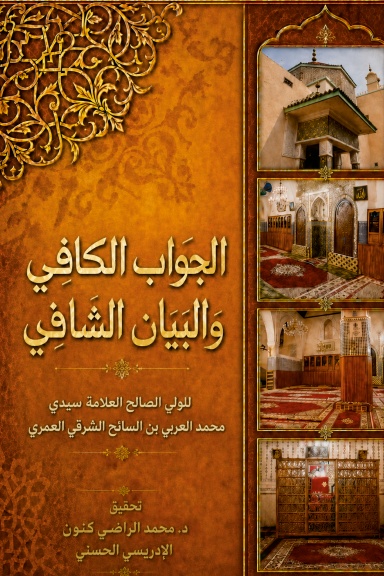
Skiredj Library of Tijani Studies
A Practical Guide to Commitment, Initiation, and the Covenant of the Tijani Path
Entering the Tijaniyya is not simply adopting a set of devotional practices. It is a spiritual covenant built on commitment, discipline, and a living chain of transmission linking the disciple to Sīdī Aḥmad al-Tijānī and ultimately to the Messenger of Allah ﷺ.
For this reason, the earliest questions new disciples ask are rarely about advanced spiritual states. They are much more practical:
What happens if someone leaves the path and later returns?
Does harming fellow disciples break one’s connection?
What exactly is initiation (talqīn)?
Can one initiate family members?
Can the Tijani wird be taken from someone who teaches multiple paths?
What authority does a muqaddam really have?
What happens when disputes arise between disciple and guide?
The great scholars of the path — particularly Sidi Ahmed Skiredj and other authoritative muqaddams — addressed these questions with precision. Their answers form an important foundation for anyone beginning the path.
This guide gathers some of those foundational rulings and teachings.
1. What Happens If Someone Leaves the Tijani Path and Later Returns?
One of the first concerns of new disciples is the seriousness of commitment.
What if someone once took the Tijani wird, later abandoned the path — intentionally or carelessly — and then wished to return?
Sidi Ahmed Skiredj explains, in al-Yawāqīt al-Aḥmadiyya al-ʿIrfāniyya:
Such a person must perform both repentance (tawba) and renewal of initiation (tajdīd).
Repentance alone is not sufficient.
The reason is that the disciple had already pledged to remain in the path until death. By abandoning the path, he broke a spiritual commitment made before Allah. That act created a disconnection (inqiṭāʿ) from the path.
Therefore two things are required:
Repentance for abandoning the covenant
Renewal of the initiation through an authorized muqaddam
Only then is the spiritual bond restored.
This illustrates an important principle of the Tijani path: the wird is not a casual practice but a lifelong covenant.
2. Does Backbiting or Creating Conflict Break One’s Connection to the Path?
Another frequent question concerns internal disputes.
What if a disciple spreads gossip, slander, or hostility among fellow disciples? Does this automatically sever his connection to the path?
Sidi Ahmed Skiredj states clearly:
A disciple is not formally disconnected from the path except through the causes explicitly mentioned by Sīdī Aḥmad al-Tijānī himself:
“Three things disconnect the seeker from us:adopting a litany from another path,visiting the saints of other paths,and abandoning the wird.”
However, this does not mean that sowing discord is a minor matter.
Backbiting (ghayba) and slander (namīma) are among the gravest sins in Islam. When they occur among brothers in the path, the harm is even greater because it damages the spiritual fraternity that the path depends upon.
Sīdī Aḥmad al-Tijānī transmitted a warning attributed to the Prophet ﷺ:
“Tell your companions not to harm one another, for what harms them harms me.”
To harm fellow disciples is therefore indirectly to harm the Messenger himself.
If such behavior continues without repentance, it may eventually lead to spiritual ruin and even to actual disconnection, because Allah may test the person with something that causes him to abandon the path altogether.
For this reason, sincere repentance and reconciliation are essential.
3. What Is Initiation (Talqīn) in the Tijani Path?
Another fundamental question concerns the meaning of initiation itself.
Initiation — called talqīn — is not merely instruction in a formula of dhikr. It is a spiritual pledge linking the disciple to the chain of the path.
The jurist and muqaddam Sidi al-Hajj Muhammad al-Zarhouni explained that talqīn is essentially a form of bayʿa, a covenant of allegiance.
Its legitimacy is established in the Qur’an itself. Allah says:
“Indeed, those who pledge allegiance to you are pledging allegiance to Allah.”(Qur’an 48:10)
He also says:
“Fulfill the covenant of Allah when you make a covenant.”(Qur’an 16:91)
And:
“Fulfill the covenant; surely the covenant will be questioned about.”(Qur’an 17:34)
Thus the disciple who receives the wird is not merely learning a practice. He is entering a covenant of spiritual discipline and loyalty.
4. Can a Man Initiate His Wife, Mother, or Female Relatives?
This question often arises in family settings.
If someone has been authorized by a muqaddam to transmit the wird to specific relatives, can he initiate them himself?
A well-known incident illustrates the answer.
A muqaddam once instructed a disciple to give the wird to his mother, which he did. Later the disciple returned saying that his wife wished to join the path. The muqaddam told him:
“Explain the conditions to her. If she accepts them, initiate her on my behalf.”
However, when the disciple later asked whether he could initiate others using that same authorization, the muqaddam replied firmly:
“You are not a muqaddam. I only authorized you to give the wird to your mother and your wife. In reality it was I who initiated them — you were only the messenger.”
This clarifies two principles:
Only authorized muqaddams can transmit the path.
A disciple may act as an intermediary when specifically instructed.
In such cases, the chain of transmission connects directly to the muqaddam, not to the intermediary.
5. Initiating Women and the Question of Physical Contact
Islamic propriety is strictly maintained in initiation.
Scholars emphasize that a muqaddam must never touch the hand of an unrelated woman during initiation.
This rule exists to prevent temptation or inappropriate emotional attachment that might arise through physical contact.
For this reason, many cautious muqaddams prefer to initiate women through a male relative acting as intermediary, who conveys the conditions and transmits the pledge.
This method preserves:
modesty
spiritual integrity
and the dignity of the path.
6. Can the Tijani Wird Be Taken from Someone Who Teaches Multiple Paths?
One of the foundational principles of the Tijani path is exclusive commitment.
Sidi Ahmed Skiredj explains : the Tijani wird must be taken on its own, not alongside another Sufi path.
If someone claims to initiate disciples into multiple paths simultaneously — including the Tijani wird — one should not take the path from him under those conditions.
A valid muqaddam does not combine the Tijani path with another path.
It is known in the literature of the path that some saints received special spiritual methods connected to the Tijani path through personal openings. However, they never imposed both paths on the same disciple.
Thus the normative practice of the Tijani zawiya — especially in Fez — remains strict exclusivity.
7. Can Non-Tijanis Recite Tijani Litanies?
Not all Tijani devotions require formal initiation.
Sidi Ahmed Skiredj explains : a muqaddam may grant permission to anyone to recite optional Tijani remembrances, even if they belong to another path.
This includes:
optional litanies
Salat al-Fātiḥ
other recommended invocations.
However, the core pillars of the path are different.
These include:
the obligatory wird
the Wazifa
the Friday remembrance
These are reserved for those who formally accept the covenant and its conditions.
8. Can Someone Practice the Wird Before Committing to the Path?
Yes — in certain cases.
Senior muqaddams sometimes allow a seeker to recite the wird temporarily as a trial before formally committing to the path.
This allows the seeker to determine whether he can realistically maintain:
the daily obligations
the spiritual discipline
the conditions of the path.
If he proves sincere and capable, he is then formally initiated.
If not, he may remain a lover (muḥibb) of the path without being bound by its covenant.
9. What Causes a Muqaddam to Lose His Authority?
The same actions that disconnect an ordinary disciple can also disconnect a muqaddam.
These include:
Taking a wird from another path.
Visiting saints of other paths for spiritual affiliation.
Abandoning the Tijani wird.
Additionally, a muqaddam loses authority if he rejects his own authorization or refuses to act upon it.
Despite his rank, the muqaddam remains fundamentally a disciple of the path, and his authority depends on maintaining its covenant.
10. What If a Disciple Breaks with His Muqaddam in Anger?
Occasionally disputes occur.
If a disciple declares in anger that there is “nothing left between him and his muqaddam,” he has effectively renounced the bond through which he received the path.
In such a case his connection is considered severed.
The remedy is simple but serious:
Seek forgiveness from the muqaddam.
Request renewal of the covenant.
If the muqaddam accepts, the disciple’s connection is restored.
11. Can a Muqaddam Revoke a Disciple’s Authorization?
By contrast, the opposite situation has a different ruling.
If a muqaddam declares in anger that a disciple’s authorization is revoked, this does not automatically sever the disciple from the path.
The Shaykh himself made clear that only the three established causes lead to disconnection.
Therefore a muqaddam’s emotional statement cannot invalidate the disciple’s bond.
The disciple should simply reconcile and maintain respect while continuing his obligations.
12. Can the Path Be Taken Through Correspondence?
Another common modern question concerns remote initiation.
Sidi Ahmed Skiredj explains : receiving authorization through correspondence is valid.
Sīdī Aḥmad al-Tijānī himself granted authorization to many seekers through letters without meeting them in person.
The spiritual bond is established through valid authorization, not merely physical contact.
However, direct transmission has additional benefits because of the spiritual gaze and personal companionship.
13. Should One Frequently Renew His Authorization?
Renewal (tajdīd) is not strictly necessary if the original authorization was valid and the disciple has remained faithful to the path.
However, many scholars recommend renewal occasionally in order to:
strengthen the spiritual bond
ensure the authenticity of the chain
protect against doubtful transmissions.
Some disciples prefer renewal through shorter chains, while others value the blessings of longer chains. Both perspectives exist within the tradition.
14. Is Companionship with a Muqaddam Equivalent to Companionship with the Shaykh?
In the Tijani path, the muqaddam acts as a representative of the Shaykh.
The spiritual grace of the path flows:
from the Prophet ﷺto Shaykh Ahmad al-Tijanito his deputiesto the disciples.
Therefore receiving the wird from a muqaddam carries the same spiritual benefit as receiving it directly from the Shaykh himself.
15. The Ethical Foundation of the Path
Beyond technical rulings, the early teachings emphasize a deeper principle.
The path is sustained not merely by rituals but by adab (spiritual etiquette).
This includes:
honoring one’s muqaddam without exaggeration
respecting other deputies
avoiding disputes
maintaining sincerity
guarding the dignity of the zawiya.
A disciple should praise his own guide with love — but never at the expense of other saints or guides.
True loyalty never requires diminishing others.
Conclusion
The earliest questions of new Tijanis revolve around commitment, authority, and spiritual etiquette.
The scholars of the path clarified these issues so that the disciple can begin his journey with certainty.
Several principles emerge repeatedly:
The wird is a lifelong covenant, not a casual practice.
The chain of authorization must be respected.
The muqaddam transmits the path but does not own it.
The spiritual fraternity of disciples must be protected.
And above all, sincerity and humility are the foundations of the path.
Whoever enters the path with these principles will find that the outer rules are not burdens, but safeguards protecting the inner journey toward Allah.
++++