Skiredj Library of Tijani Studies
How devotion to the Prophet’s daughter lives on in the Tijani tradition
In the Tijani path, love for the Ahl al-Bayt, the noble family of the Prophet Muhammad, peace and blessings be upon him, is not a marginal sentiment. It is a living part of spiritual life, devotion, and adab. Among the members of the Prophet’s household, Sayyida Fatima al-Zahra, may Allah be pleased with her, occupies a place of profound reverence in the hearts of Tijani disciples.
This love is not merely theoretical. It appears in prayer, in spiritual teaching, in reverence for the prophetic household, and in devotional literature. A remarkable modern example of this attachment can be found in the poetry of the scholar Sidi Mohamed Erradi Guennūn Al-Idrissi Al-Hassani, whose writings express deep love, honor, and veneration for Sayyida Fatima.
His poetic collection known as the Fatimiyyat includes forty poems in praise of Sayyida Fatima al-Zahra, composed decades ago. This body of work offers a striking example of how the love of the Prophet’s daughter continues to live in Tijani hearts.
Love for Sayyida Fatima in the Tijani spirit
The Tijani tradition is deeply rooted in love for the Messenger of Allah, peace and blessings be upon him, and this naturally extends to love for his purified family. In this perspective, devotion to Sayyida Fatima is part of a wider spiritual ethic built on reverence, gratitude, fidelity, and recognition of sacred rank.
For Tijanis, Sayyida Fatima is not remembered only as a historical figure. She is honored as:
the beloved daughter of the Prophet,
the pure one of the Prophetic household,
the mother of al-Hasan and al-Husayn,
and one of the highest women in spiritual rank and honor.
This explains why scholars and devotees of the Tijani path have often spoken of her with tenderness, awe, and humility.
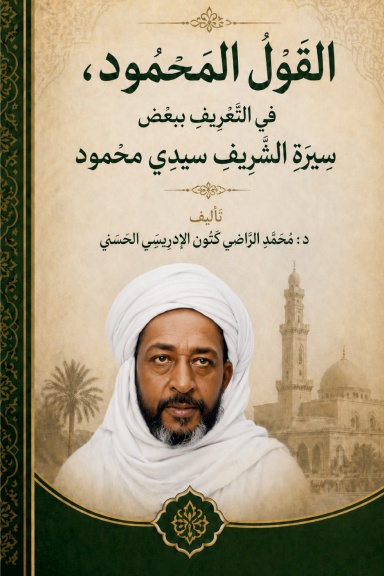
The example of Sidi Mohamed Erradi Guennūn
Among contemporary voices, Sidi Mohamed Erradi Guennūn stands out as a vivid example of this love. In his own words, his Fatimiyyat contains forty poems dedicated to the praise of “the pure piece” of the Prophet, Sayyida Fatima al-Zahra, may Allah be pleased with her. He explains that he composed these poems nearly forty years ago, at the beginning of the current Hijri century.
This is significant. It shows that his praise of Sayyida Fatima was not occasional or symbolic. It was sustained, deliberate, and heartfelt. Writing a single poem can be an act of admiration. Writing forty poems reveals a long-standing devotion.
Through these verses, he presents Sayyida Fatima as a figure of purity, majesty, tenderness, truth, and nearness to the Prophet. His language is reverent and elevated, yet full of warmth and yearning.
A poetry of reverence, beauty, and nearness
One of the recurring themes in these poems is the idea that Sayyida Fatima is a source of spiritual light and noble remembrance. In one poem, he writes:
The fragrance spread, and the wood grew sweet with perfume:this is Fatima, so let the soul rejoice.
This is a compact but powerful image. Her mention is linked to fragrance, sweetness, and joy of the soul. In Tijani sensibility, this is not ornamental language alone. It reflects a spiritual culture in which remembrance of the Prophet’s household brings softness to the heart.
In another passage, he writes:
My soul longs for the praise of Fatima,for in it are grace, a flowing spring, and a cupbearer.
This translation conveys the idea that praising Sayyida Fatima is not simply literary devotion. It is a source of spiritual nourishment. Her praise becomes a means of inward refreshment, almost like drinking from a sacred spring.
Sayyida Fatima as the daughter of the Prophet and lady of honor
Another major theme in these poems is her unique rank as the daughter of the Messenger of Allah, peace and blessings be upon him. Sidi Guennūn repeatedly ties her honor to her noble origin without reducing her merit to lineage alone. Her purity, her truthfulness, and her spiritual station are all highlighted.
In one striking passage, he says:
Daughter of the chosen intercessor, the best of those whose eyes weptfrom awe of the Everlasting Protector.
And in another poem:
No woman was ever raised above her,for Allah surrounded her with protecting grace.
These lines present Sayyida Fatima as singular in rank. The tone is not polemical, but devotional. It is the language of someone who sees her as one of the highest lights of the Prophetic household.
A love joined to humility and supplication
The poems are not only descriptive. They are also full of humility and supplication. The poet does not merely praise Sayyida Fatima from a distance. He turns toward her station with need, adab, and hope in Allah.
In one moving passage, he writes:
O daughter of the one for whom the moon was split at night,your unique sanctuary is enough for the one who seeks refuge.
And elsewhere:
I came to your sanctuary by the right of the Onewho was manifested through the secrets of the Merciful Throne.
These lines show something important about Tijani devotional culture: love for Sayyida Fatima is connected to humility, dependence on Allah, and spiritual refinement. It is not cold admiration. It is loving reverence shaped by faith.
The imagery of al-Baqi‘ and sacred memory
Several of the poems evoke al-Baqi‘, the blessed cemetery in Madinah associated in Muslim memory with Sayyida Fatima and the noble family. This sacred geography deepens the emotional and spiritual force of the poems.
In one beautiful passage, Sidi Guennūn writes:
Turn to the right toward al-Baqi‘, and take me there,to a مقام crowned with lights.
And further on:
It is the garden of the Pure Lady, so show adab—remove your sandals, for it is a place of radiance.
This language reflects reverence, not casual remembrance. The place associated with Sayyida Fatima is described as luminous and worthy of adab. That is deeply characteristic of the Tijani ethos: love is expressed through manners, humility, and awareness of sacred presence.
Sayyida Fatima in the moral imagination of the Tijanis
The love of Tijanis for Sayyida Fatima is not only emotional. It is also ethical. In the poems, she is associated with virtues such as dignity, modesty, tenderness, patience, and purity.
One poem says:
In her, dignity and forbearance reigned תמיד,along with tenderness, chastity, and modesty.
Another says:
She turned away from the adornments of worldly lifeand longed instead for gardens surrounded by divine generosity.
These lines show that love for Sayyida Fatima is also love for what she represents: spiritual nobility, self-restraint, truthfulness, and nearness to Allah.
Why this matters in the Tijani tradition
The Tijani path insists on attachment to the Prophet, peace and blessings be upon him, and on walking with adab, love, and sincerity. Love for Sayyida Fatima fits naturally into this framework. She is part of the Prophet’s light in the memory of the community, and honoring her becomes one way of honoring him.
The example of Sidi Mohamed Erradi Guennūn is particularly valuable because it shows that this devotion is still alive in the present age. His poems are not relics of a distant past. They are evidence that the love of Sayyida Fatima continues to inspire learned, articulate, and spiritually rooted men of the Tijani way.
His work shows that praise of Sayyida Fatima can still be intellectually serious, spiritually tender, and aesthetically beautiful at the same time.
A final example from his poetry
One of the clearest expressions of his inner attachment appears in these lines:
My praise of her is my goal and the limit of my hope,my honor, my means, and my remedy.
This is perhaps one of the strongest summaries of the entire spirit behind these poems. Sayyida Fatima is not treated as a distant symbol. Her remembrance is woven into longing, hope, honor, and healing.
That is precisely why Sidi Guennūn serves as such a meaningful example of Tijani love for the Prophet’s daughter.
Conclusion
The love of the Tijanis for Sayyida Fatima al-Zahra, may Allah be pleased with her, is a living reality rooted in devotion to the Prophet Muhammad, peace and blessings be upon him, and reverence for his noble household. It is expressed through prayer, spiritual etiquette, literature, and heartfelt remembrance.
The poetry of Sidi Mohamed Erradi Guennūn offers a powerful contemporary example of this attachment. Through his forty poems in praise of Sayyida Fatima, he shows how deep this love can be: reverent, luminous, humble, and sincere.
In his verses, Sayyida Fatima appears as purity, fragrance, light, dignity, and refuge. And through those verses, we see something essential about the Tijani heart: its love for the Prophet is inseparable from love for his family, and especially for his noble daughter, Sayyida Fatima al-Zahra.
++++