Skiredj Library of Tijani Studies
How Tijani devotion lives through poetry, remembrance, and sacred attachment
In the Tijani path, praise is not merely literary expression. It is a language of love, fidelity, reverence, and spiritual gratitude. The Tijani disciple praises Sīdī Aḥmad al-Tijānī, may Allah be pleased with him, because he sees in him a guide to Allah, a reviver of the Sunnah, and a master of the Muhammadan path. He praises the zawiya because it is a place of remembrance, transmission, blessing, and gathering. He praises the wird, the Wadhifa, and Jawharat al-Kamal because they are not viewed as empty formulas, but as luminous acts of devotion that shape the inner life of the seeker.
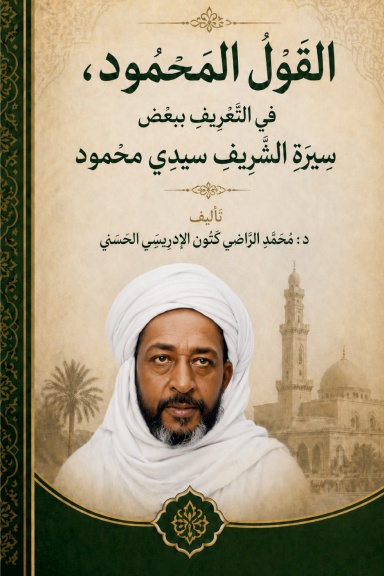
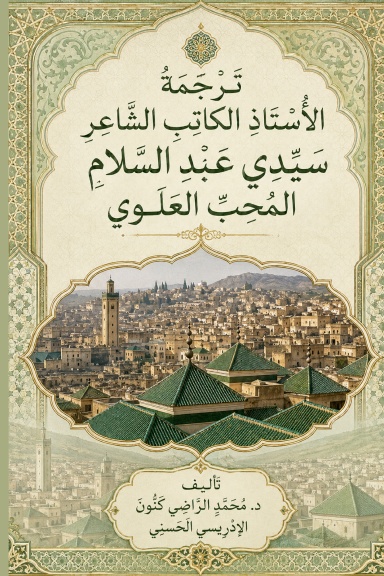
One of the clearest modern examples of this devotional culture is found in the poetry of Professor Sidi Mohamed Erradi Guennūn Al-Idrissi Al-Hassani. Across many poems, he celebrates the Shaykh, the Tijani spiritual order, its sacred places, its litanies, and its companions with a language full of awe, tenderness, and certainty.
His poetry shows that in the Tijani tradition, praise is a form of remembrance, and remembrance is a form of love.
Praising Sīdī Aḥmad al-Tijānī
At the center of Tijani devotion stands Shaykh Abu al-Abbas Sīdī Aḥmad al-Tijānī, may Allah be pleased with him. In the poetry of Sidi Guennūn, the Shaykh is praised as guide, pole, source of spiritual support, and heir to the Muhammadan light.
In one poem, he writes:
We came carrying burdens of longing and loveto Ahmad, the Seal, al-Tijani ibn Salim.
This is direct, intimate, and devotional. The visit to the Shaykh is described not as tourism, but as a journey of longing.
In another passage, he says:
He is the known barzakh—marvel thenat the fragrant breezes hidden in his world.
And elsewhere:
Ahmad is the light of truth: whoever takes light from himbecomes firmly rooted on the path of abundant good.
These lines are very revealing. The Shaykh is not praised simply for personal piety, but as a living axis of guidance, a bridge to spiritual realization, and a source of illumination for those who seek Allah.
Another striking verse says:
Come toward the sea of the knowers, Abu al-Fayd,and leave the river and the shallow stream behind.
Here, the poet contrasts ordinary waters with the vast sea. It is a way of saying that Shaykh al-Tijani is not one spiritual teacher among others, but an ocean of gnosis in the eyes of his admirers.
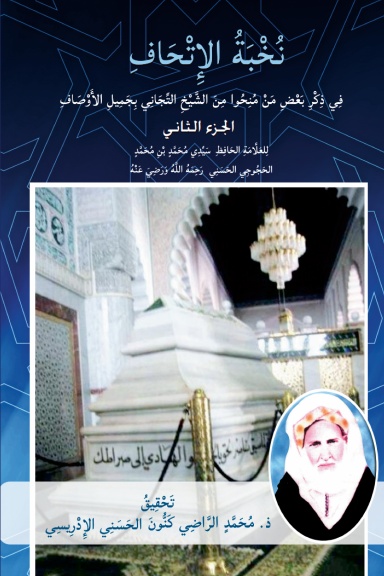
The Tijani love for the Shaykh’s shrine in Fez
For Tijanis, the resting place of Sīdī Aḥmad al-Tijānī in Fez is not an ordinary place. It is associated with reverence, visitation, prayer, memory, and spiritual connection. In Sidi Guennūn’s poetry, Fez appears as a city of longing because it houses the Shaykh’s blessed presence.
In one poem composed during a visit to the shrine, he writes:
If you ask what lies behind this door—it is knowledge whose very core is pure essence.
Then he adds:
It is the Pole, the one who truly defends the Sunnah,even if all buzzing voices rise against him.
And further:
O my master Sīdī Aḥmad al-Tijānī—how noble he is,an ocean without limit in overflowing grace.
The door of the shrine becomes symbolic. It is not only the entrance to a building, but the threshold of knowledge, reverence, and spiritual inheritance.
In another poem addressed to a friend going to visit the shrine, he says:
Come at once toward this mausoleum,and delight in the sight of the Pole of nobility, light, and radiant face.
And then:
Hold fast to his wird with humility and submission,and enjoy a life of inward peace.
This is important: the visit to the shrine leads naturally to attachment to the wird. Place and practice are linked. Love for the Shaykh is completed by commitment to his path.
The zawiya as a place of guidance and blessing
The Tijani zawiya is not seen simply as a building. It is understood as a space of remembrance, prayer, instruction, hospitality, discipline, and spiritual gathering. In Sidi Guennūn’s poems, the zawiya almost speaks with its own voice.
In one poem written as if on behalf of the great Tijani zawiya in Fez, he says:
Were it not for Abu al-Abbas,I would not have tasted honor or luminous giving.
Were it not for Abu al-Abbas,I would have been like ruins, or one among shadows.
This is a remarkable image. The greatness of the zawiya comes from its connection to the Shaykh. Without him, it would be an empty shell; through him, it becomes a living sanctuary.
In another poem, the zawiya says:
I am the one whose name has run through East and West,exalted across all pages.
I am the daughter of a noble, generous master—I mean al-Tijani, the place of all affection and love.
The zawiya is thus portrayed as a child of the Shaykh, carrying his fragrance, his mission, and his light. This personified language shows how deeply the Tijani imagination connects sacred architecture with spiritual presence.
Praise of the Wird Tijani
The Tijani wird occupies a central place in the daily life of the disciple. It is not seen as a secondary practice, but as a source of discipline, serenity, remembrance, and divine opening. Sidi Guennūn devoted explicit verses to praising the wird itself.
In one poem, he writes:
Truly, awrad are honor and delight,and from our great wird the harvest has ripened.
This is a powerful metaphor. The wird is like a field whose fruits mature through regular practice.
He continues:
How noble is a wird whose command agrees with the Sacred Law,untouched by flaw, excess, or contradiction.
How noble is a wird filled with virtues,with no flaw in it, no deficiency, no fracture.
And then:
Through his wird the heart became wholesome and expanded;within its circle, root and branch were gathered.
Through his wird our affairs were relieved;by the wird of Imam Ahmad, the torn cloth was mended.
This language links the wird to healing, inward expansion, and restoration. The imagery of mending torn fabric suggests that the wird repairs what is broken in the life of the seeker.
One of the strongest lines says:
Through his wird came righteousness, God-consciousness, goodness, and guidance,and the Sacred Law itself confirmed it.
That is a core Tijani claim: the wird is beloved not because it is novel, but because it stands in harmony with Qur'an and Sunnah.
The Wadhifa in Tijani devotion
The Wadhifa is one of the indispensable collective litanies of the Tijani path, and Sidi Guennūn praises it in highly affectionate terms. He speaks of it almost as a noble lady: beautiful, dignified, and spiritually fruitful.
He writes:
My thoughts were occupied by a noble and chaste one,graceful in beauty, delicate and light.
If only she would appear before my eyes once,for she is loving and familiar by nature.
Then he clarifies:
She is the noble free one, the honored one among people—truly, she is the Wadhifa.
This poetic personification is deliberate. It teaches affection for the practice itself. The Wadhifa is not treated as a burden, but as a beloved act of remembrance.
He continues:
If you were to see the excellence and nobility that belong to her,the lofty gifts and magnificent graces;
if you were to see the profit, the increase, and the shaded mercy within her,and the tremendous virtues she carries in every place...
And one especially important verse says:
Precisely within her, the Chosen Prophet is presenttogether with the noble Companions.
This line reflects the immense reverence with which the Wadhifa is regarded in Tijani spirituality. It is not seen as ordinary recitation, but as an act surrounded by sacred presence and prophetic nearness.
Jawharat al-Kamal: the jewel of praise
Among Tijani devotional texts, few are praised with as much wonder as Salat Jawharat al-Kamal. In Sidi Guennūn’s poetry, it is treated as a jewel of spiritual perfection, a prayer full of secrets, openings, and beauty.
He writes:
Thus it became clear that she, endowed with noble qualities,is the prayer of grace: Jawharat al-Kamal.
A prayer like a flowing spring,sweet and refreshing like pure water.
He continues:
A prayer filled with secrets,sought as a means of gift and attainment.
A prayer that gathered all meanings within it,and so became one of the signs of majesty.
And then comes one of the most striking passages:
If you desire spiritual gifts, then hold fast to it;cling to it with firmness.
Persist in its remembrance without interruption,without break through the passing nights.
You will behold the banner of witnessing—this is true—openly, in wakefulness, without confusion.
You will truly behold the Guide, the Messenger of Allah,the Imam of the people of guidance, the best of men.
These verses summarize why Jawharat al-Kamal is so beloved among Tijanis. It is praised not only for eloquence, but for its perceived power of presence, witnessing, and deepening love for the Prophet, peace and blessings be upon him.
Sidi Guennūn then concludes:
Its companion is Abu al-Abbas,whose equal cannot be found in this domain.
Thus even the praise of Jawharat al-Kamal returns to the praise of the Shaykh, since in the Tijani path the litany and the one who transmitted it are inseparable in devotional memory.
Praise of the Shaykh’s companions and disciples
The Tijani tradition also honors the companions, disciples, and spiritual inheritors of Shaykh al-Tijani. In the poet’s language, love for the Shaykh extends naturally to love for his followers, because they carried his path, preserved his teachings, and transmitted his adab.
He writes:
O noble disciples of the Shaykh, you are the desire of my heart;through you comes my defense, and through you my spiritual gain.
Disciples of Abu al-Abbas Ahmad, our master—al-Tijani, knower and Pole, descendant of noble rank.
Then he says:
Your nearness to me is immense,and your distance is painful, difficult, and hard.
You are our great treasure and rich gain,a magnificent profit that came from the Presence of divine bestowal.
And further:
Your guidance lights the road in every landfor the one who has returned seeking union and nearness.
This language shows that Tijani praise is not isolated at the top. It extends through the entire living chain of companionship, instruction, and spiritual service.
Love for the Shaykh, the path, and its practices as one whole
One of the most important things these poems reveal is that Tijani devotion is integrated. Love for the Shaykh, attachment to the zawiya, practice of the wird, recitation of the Wadhifa, reverence for Jawharat al-Kamal, and esteem for the companions of the path all belong to one spiritual world.
In one poem, Sidi Guennūn beautifully writes:
By his awrad our eyes found restin attaining hopes, salvation, and triumph.
You are for us a spring with abundant water;through you we remove the heat of humiliation, weakness, and incapacity.
And elsewhere:
Our love for him surpasseswhat people have spoken of in every rising and falling tone.
We found with him what delights people of understanding,so we inclined toward his lofty garden.
These lines sum up the devotional logic of the Tijani path. The Shaykh is loved because he leads to Allah. The practices are loved because they preserve remembrance. The zawiya is loved because it gathers the people of love. The companions are loved because they carry the trust.
Conclusion
The praise found in Tijani poetry is not ornamental excess. It is a window into a living spiritual culture built on reverence, gratitude, remembrance, and attachment to the Muhammadan way. Through the poetry of Professor Sidi Mohamed Erradi Guennūn, we see how Tijanis praise:
Sīdī Aḥmad al-Tijānī as guide, Pole, and source of light,
the zawiya as a sanctuary of remembrance and blessing,
the wird as a path of healing, guidance, and inward expansion,
the Wadhifa as a beloved and noble collective dhikr,
Jawharat al-Kamal as a prayer of secrets, witnessing, and beauty,
and the companions of the path as inheritors of guidance and spiritual generosity.
His verses make one thing unmistakably clear: in our Tijani tradition, praise is an act of love, and love is one of the strongest languages of faith.
++++