ar
ʿUmar al-Fūtī al-Tijānī
Profile dossier
Author
Roles
1
Related corpus
3 books
Biographical notice
Sidi Omar Fouti
Sidi Omar Fouti, whose full name is Sidi al-Hajj Omar Ben Sa‘id al-Fouti, was one of the greatest figures of the Tijaniyya in West Africa. He was at once a scholar, spiritual master, preacher, reformer, leader, and fighter, and he left a profound mark on the Islamic history of Senegal, Fouta Toro, Fouta Djallon, Nigeria, and other parts of West Africa.
Lineage
His lineage goes back to the Companion ‘Uqba ibn ‘Amir, and through him to Murra ibn Ka‘b, one of the ancestors of the Prophet. This noble lineage gave him a high religious and social standing among the peoples of Fouta and its surrounding communities.
Birth and Early Life
He was born in Halwar, near Podor, in the region of Fouta Toro in northern Senegal, just before dawn on Wednesday, 23 Sha‘ban 1213 AH / January 30, 1799 CE.
His father, Sa‘id Ben Othman, was a pious and ascetic jurist, and his mother was Adma, daughter of Imam Siri Demba. He thus grew up in an environment of learning, religion, and discipline.
The sources also preserve reports of special signs surrounding his early childhood.
Education
At the age of five, his father placed him in the Qur’anic school of Qura Hamad in Halwar. He memorized the Qur’an by the age of eight, and signs of exceptional ability already appeared during his early recitation.
He then refined his recitation under his older brother Ahmed, before continuing his studies in Derbas, where he learned language, jurisprudence, grammar, and related sciences under Basmur al-Amir Ben Abdallah.
He later studied in another school under a scholar named Ahmed Hilm, receiving instruction in prosody, important study texts, and jurisprudence, including the Mukhtasar of Khalil. His scholarly formation was therefore broad, rigorous, and deeply rooted in the learned traditions of West Africa.
Entering the Tijani Path
After completing his formal studies, he developed a strong yearning for the spiritual sciences, discipline of the soul, and the path of inner training. At this point, he met the muqaddam Sidi Abdelkarim an-Naqil al-Foutajalli at-Tinbawi in 1239 AH / 1824 CE, one of the leading scholars of Fouta Djallon.
He remained with him for over a year and received from him the basic litanies of the Tijaniyya, especially the wird, the wazifa, the Friday afternoon dhikr, and the Hizb as-Sayfi.
This was the beginning of his real formation in the path.
Journey to the Sacred Lands
He had originally intended to go on pilgrimage together with his teacher Abdelkarim, but circumstances prevented that. He therefore set out on his own around 1240 AH / 1825 CE, after preparing for the journey and taking leave of his family.
This journey became even more important when he learned that the great khalifa Sidi Mohamed al-Ghali Abu Talib was residing in Mecca. Upon arrival, after completing the rites of arrival, he met him near the Maqam Ibrahim after the ‘asr prayer. The khalifa welcomed him warmly and immediately handed him a copy of Jawahir al-Ma‘ani.
Their first meeting took place at the beginning of Dhu al-Hijja 1241 AH / 1826 CE.
His Companionship with Sidi Mohamed al-Ghali
After completing the pilgrimage, he traveled with him to Medina, where he remained in his company. He served him for about three years, surrendering himself and his wealth completely to his guidance.
During this period, he renewed his initiation, received litanies and spiritual secrets, and was raised to an exceptional rank. His master told him in the Prophet’s Mosque:“We make people muqaddams in transmitting the wird. But you are a khalifa among the khalifas of the shaykh, not merely a muqaddam.”
This is one of the most important signs of his rank within the Tijani chain.
Egypt and Jerusalem
Around 1245 AH, he left his master and went to Cairo, then to Palestine, where he stayed in Jerusalem for seven months with his brother Ali Ben Sa‘id.
During this stay, by God’s permission, he healed the daughter of the ruler of Jerusalem from a severe affliction that had nearly led to her death. News of this spread widely, and people began to flock to him.
Some scholars, driven by jealousy, tested him with difficult questions in both transmitted and rational sciences. He answered with wisdom, calmness, and intellectual strength until they recognized his superiority, apologized, and even placed him forward to lead prayer and deliver the Friday sermon in Jerusalem.
Return to Africa and Religious Mission
He returned to his homeland around 1254 AH / 1838 CE, then traveled to the Hausa lands in Nigeria, where he stayed about seven years with Mohamed Ben Othman Foudi.
He later returned to Fouta Djallon for four years, and then moved to Fouta Toro, where he began a major mission of دعوت to God and His Messenger. Leading scholars responded to his call, and many groups of non-Muslims entered Islam through his preaching.
Struggle and Jihad
The spread of his mission brought him into direct confrontation with pagan and hostile forces. He led major military campaigns, won significant victories, and continued his struggle against idolatry and resistance to Islam for more than twelve years.
He was eventually martyred at Degembéré on 3 Ramadan 1280 AH / February 12, 1864 CE, when he was around seventy years old.
Works
Sidi Omar Fouti left more than forty works, including:
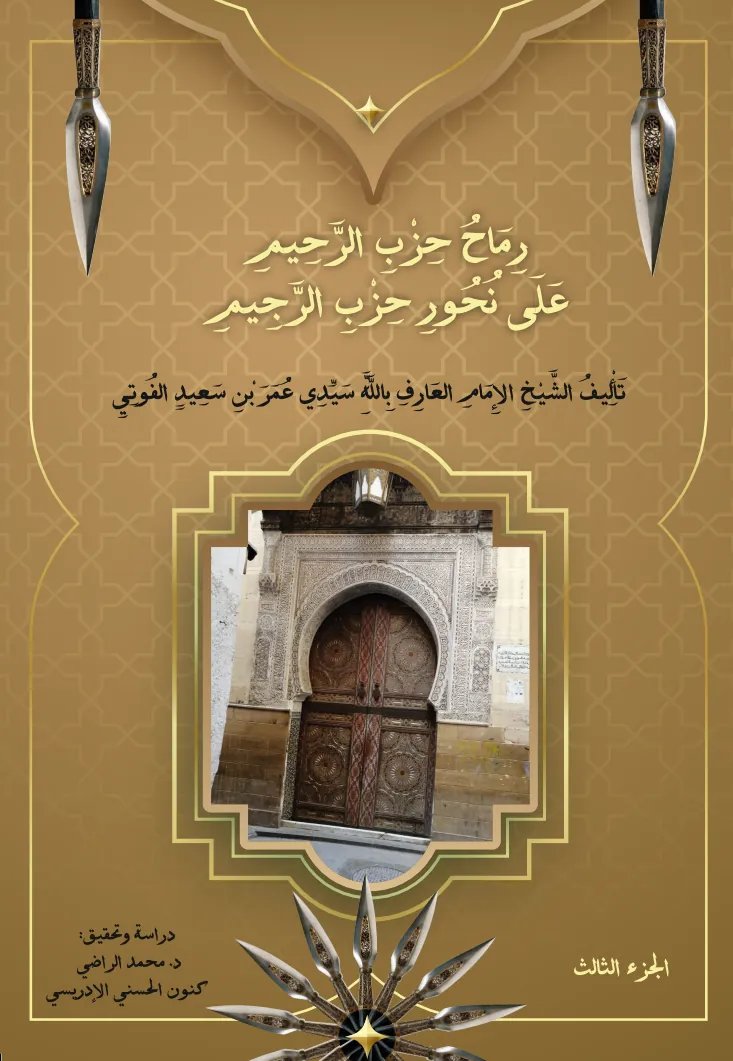
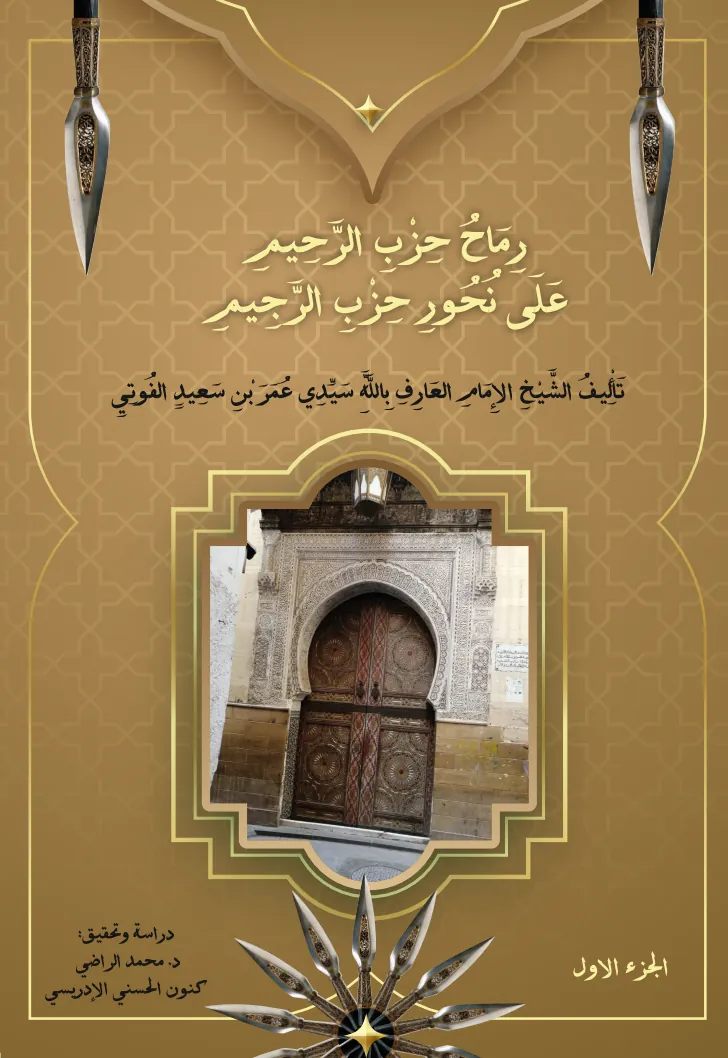
Rimah Hizb ar-Rahim ‘ala Nuhur Hizb ar-Rajim
Suyuf as-Sa‘id al-Mu‘taqid fi Ahl Allah ka-t-Tijani
Safinat as-Sa‘ada
An-Nush al-Mubin
Al-Maqasid as-Saniyya
Tadhkirat al-Ghafilin
Tadhkirat al-Mustarshidin
Kasb al-Faqir fi Madh an-Nabi al-Bashir
Al-Ajwiba al-Fiqhiyya
Sharh Salat Jawharat al-Kamal
Sharh Salat Yaqutat al-Haqa’iq
Risala fi Adab al-Murid
Taqyid fi Khawass Hizb as-Sayfi
Manzuma fi Islah Dhat al-Bayn
Manzuma fi ‘Ilm at-Tawhid
Lamiyyat at-Tullab
Hidayat al-Mudhnibin
Among these, Rimah remains by far his most famous work.
His Library
The sources mention the existence of a major Omarian library, much of which was seized by French colonial authorities after the capture of Ségou in April 1890. Four boxes of manuscripts were sent to Paris, and later transferred in 1892 to the French National Library.
The collection reportedly included more than five hundred manuscript titles, showing the remarkable scale of his intellectual legacy.
Reputation among Scholars
Many scholars from Morocco, Mauritania, and West Africa praised Sidi Omar Fouti in letters, poems, and biographical works. They described him as:
an Amir of the Believers
a defender of truth
a reviver of the path
a man who united outward struggle and inward realization
a leader whose age produced no equal
Some even stated that if books had disappeared from the world, he could have dictated many of them again from memory.
Legacy
Sidi Omar Fouti left an immense legacy in preaching, spiritual education, jihad, teaching, and writing. He played a decisive role in spreading the Tijani path across West Africa and stood as a powerful model of the scholar-guide, reformer, and spiritual leader.
He remains one of the greatest figures in West African Islamic history and one of the major names of the Tijani tradition.