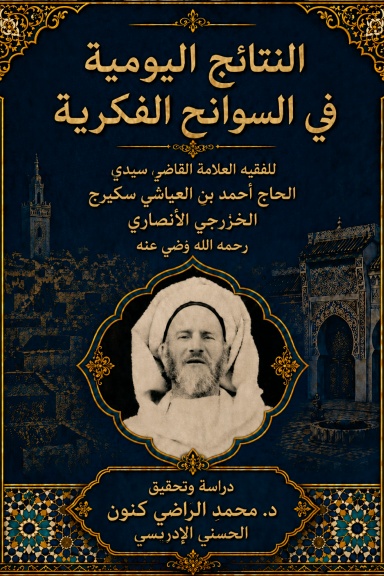
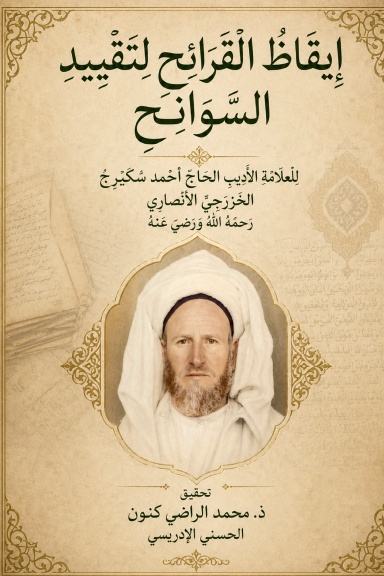
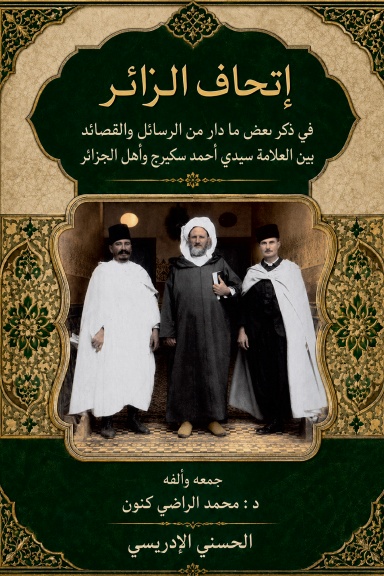
Skiredj Library of Tijani Studies
In the name of Allah, the All-Merciful, the Most Merciful.
May Allah send prayers and peace upon our master Sayyidina Muhammad, upon his family, and upon his companions.
A respected Tijani brother from Ghana, a jurist, scholar, imam, and preacher, sent a serious warning about a new phenomenon that has emerged in his country. According to his report, a group has begun promoting what it calls “Chiti Aye,” meaning “Tijani Shiism.” Its numbers are said to have grown significantly, and its message has begun to circulate among some Tijani circles in Ghana.
This issue deserves careful attention. It touches on doctrine, transmission, religious education, and the preservation of the Sunni scholarly foundations of the Tijani path. It also raises a broader question: how should Tijani communities respond when external ideological influences attempt to attach themselves to the Tariqa while altering its doctrinal boundaries?
Why This Question Matters in Ghana
Ghana occupies an important place in the history of the Tijaniyya in West Africa. The path is deeply rooted there, and a large part of the Muslim population is affiliated with it. Some estimates place the number of Tijanis in Ghana in the millions. For that reason, any movement that seeks to reshape or redirect Tijani identity in that country is not a marginal matter.
The concern expressed by Ghanaian scholars is that some individuals, especially among the poorly educated or religiously uninformed, have begun defending unfamiliar theological claims under a Tijani label. According to these reports, such arguments were learned from visiting Shi‘i preachers and activists who introduced them through teaching networks, persuasion, and ideological outreach.
In this context, the issue is not merely one of labels. It is a question of creed, religious authority, and the safeguarding of the inherited Sunni identity of the Tijani path.
The Larger Religious Context
The concern raised in Ghana is presented as part of a wider trend. Shi‘i religious influence, according to these warnings, has expanded over the years through schools, institutions, and missionary efforts in parts of West Africa. Ghana is described as one of the countries affected, but not the only one. Similar concerns have been raised regarding Nigeria, Guinea, Mali, Côte d’Ivoire, Burkina Faso, and other countries where the Tijaniyya is historically strong.
What makes the Ghanaian case especially sensitive is that the Tijani path is one of the most widespread Muslim currents in the country. As a result, it has become a natural target for anyone seeking broad religious influence among the population.
A Key Doctrinal Question: Can a Tijani Adopt a Non-Sunni Creed?
The central issue is whether a Tijani disciple may remain within the path while adopting a creed outside the doctrinal framework of Ahl al-Sunna wa al-Jama‘a.
Within the traditional Sunni-Tijani understanding reflected in the material you provided, the answer is clear. A disciple may follow one of the recognized Sunni legal schools, such as the Maliki, Shafi‘i, Hanafi, or Hanbali schools. Likewise, within Sunni theology, the recognized doctrinal frameworks of the Ash‘ari and Maturidi traditions fall within accepted orthodoxy.
But beyond those recognized Sunni frameworks, the text presents clear red lines. In this understanding, the Tijani path is not open to the adoption of doctrines considered outside the creed of Ahl al-Sunna wa al-Jama‘a.
The Position Attributed to Sidi Mohamed Lahjouji
A central argument in the text is drawn from the scholar Sidi Mohamed Lahjouji, presented as one of the important historians and authorities of the Tijani path.
He addressed the common statement that the Tijani way may be given to any Muslim who requests it, whether free or slave, obedient or sinful, male or female, old or young. According to Lahjouji’s interpretation, the term “Muslim” in that context is not unrestricted. Rather, it is to be understood within the framework of sound Sunni Islam, not as including every sectarian affiliation without qualification.
Based on that reading, the Tijani path, in this interpretation, is not to be imparted to those who adhere to doctrines regarded as deviant from Sunni orthodoxy. The argument here is not social exclusion for its own sake, but doctrinal consistency: the Tariqa is rooted in a particular creed, and that creed cannot be redefined by importing conflicting theological premises.
The Question of the Companions of the Prophet
One of the strongest themes in the text is the place of the Companions of the Prophet, peace and blessings be upon him.
The argument is that Sīdī Aḥmad al-Tijānī treated reverence for the noble Companions as a major doctrinal principle. For that reason, any position that involves attacking, belittling, or vilifying the Companions is presented as fundamentally incompatible with the spirit and teachings of the Tijani path.
This point is particularly emphasized because the text associates Shi‘i doctrines with negative positions toward a number of major Companions, including Sayyidina Abu Bakr al-Siddiq, Sayyidina ‘Umar ibn al-Khattab, Sayyidina ‘Uthman ibn ‘Affan, Sayyida ‘A’isha, and others, may Allah be pleased with them all.
In the Sunni-Tijani perspective reflected here, disrespect toward the Companions is not a secondary issue. It is a red line. The path is built upon love of the Prophet, peace and blessings be upon him, and that includes reverence for his Companions.
A Report About Sīdī Aḥmad al-Tijānī Himself
The text also cites a report attributed to the scholar Sidi Ahmed ben Ayachi Skiredj. In that report, a scholar from the Middle East came to Fez during the lifetime of Sīdī Aḥmad al-Tijānī and asked to receive the wird of the path.
According to the account, the Shaykh turned away from him and did not even face him. When his companion Sidi al-Ghali Abu Talib later asked why, the Shaykh reportedly explained that the man belittled some of the noble Companions of the Prophet, peace and blessings be upon him.
The Shaykh is then quoted as saying words to the effect of: how could he give his wird to someone who belittles one of the noble Companions of the Prophet?
In the framework of the article, this report functions as a foundational proof: the issue is not a recent polemic, but a matter tied to the doctrinal integrity of the path as understood by its own كبار العلماء and transmitters.
The Case of “Narjissa Anbariya”
Another issue raised in the text is the use of the invocation known as Narjissa Anbariya.
According to the concern expressed, some have tried to use this text as proof that the Tijani path is compatible with Shi‘i religious doctrines, especially because it contains forms of invocation tied to revered sacred figures. Some even claimed that the text came from Sīdī Aḥmad al-Tijānī himself and was transmitted through Sidi Ibrahim Riyahi.
The article rejects that claim outright.
Instead, it affirms that Narjissa Anbariya was composed by the great Tunisian scholar Sidi Ibrahim Riyahi before his entry into the Tijani path, when he was still affiliated with the Shadhili path. Therefore, it is not to be treated as a Tijani litany, nor as evidence for Tijani doctrinal alignment with Shi‘i teachings.
The text further reports that when the collection Ahzab wa Awrad was prepared, this invocation was included by mistake. A handwritten marginal note attributed to Sidi Ahmed ben Ayachi Skiredj explicitly corrected that inclusion and stated that the piece was neither from Sīdī Aḥmad al-Tijānī nor from his companions, but rather from Sidi Ibrahim Riyahi before his Tijani affiliation.
This clarification is important for preserving textual accuracy and preventing later doctrinal confusion.
A Call for Scholarly Responsibility
One of the most striking features of the material is its repeated lament: where are the responsible scholars of the Tijani path, and what concrete plan have they brought to respond to this challenge?
That question remains highly relevant. Doctrinal confusion rarely spreads where education is strong, scholars are present, and the community is rooted in sound teaching. It spreads where religious illiteracy is widespread, where Arabic and Islamic scholarship are weak, and where misinformation is allowed to circulate without serious correction.
The proposed response, therefore, is not noise, anger, or slogan-based reaction. It is scholarship. The path needs its jurists, teachers, historians, and thinkers. It needs those who can explain its creed, clarify its conditions, defend its textual heritage, and educate disciples with wisdom and firmness.
What Must Be Preserved
The article’s central concern is that the Tijani path should remain what it has always claimed to be: a Sunni path of knowledge, discipline, reverence, clarity, and spiritual refinement.
In this view, preserving the path requires preserving several fundamentals:
fidelity to Ahl al-Sunna wa al-Jama‘a
respect for the Companions of the Prophet
clarity about what belongs to the path and what does not
vigilance toward imported doctrines presented under misleading labels
and a renewed commitment to serious religious education
The issue is therefore larger than one country. Ghana is an urgent example, but the broader concern extends to other parts of West Africa and beyond.
Conclusion
The debate over “Tijani Shiism” in Ghana is not a minor internal disagreement. It is presented as a doctrinal challenge touching the identity, transmission, and integrity of the Tijani path in one of its major West African strongholds.
The traditional scholarly position reflected in your material is that the Tijani path is rooted in Sunni creed and cannot be redefined through the adoption of non-Sunni theological frameworks. This position is reinforced through appeals to scholars such as Sidi Mohamed Lahjouji and Sidi Ahmed ben Ayachi Skiredj, through the centrality of reverence for the Companions, and through textual clarification regarding works such as Narjissa Anbariya.
For that reason, the proper response is not silence. It is clarity, scholarship, education, and organized religious guidance. If the Tijaniyya is to remain strong, then its scholars and responsible voices must continue to teach it as a path of sound doctrine, sound transmission, and sound belonging.
++++