Skiredj Library of Tijani Studies
In the name of Allah, the Most Merciful, the Especially Merciful. May Allah send blessings and peace upon our master Muhammad, his family, and his companions.
Sidi Ahmed ibn al-Ayashi Skiredj was one of the most distinguished Moroccan scholars of the modern era and one of the great intellectual and spiritual figures of the Tijani path. He was a judge, jurist, man of letters, historian, poet, Sufi master, and prolific author whose legacy continues to shape Tijani scholarship to this day. His life brought together learning, spiritual discipline, public service, literary brilliance, and unwavering devotion to the defense and transmission of the Tijani tradition.
This encyclopedic biography presents a full introduction to his ancestry, family, upbringing, education, career, commitment to the Tijani path, writings, students, children, and enduring legacy.
Who Was Sidi Ahmed Skiredj?
Sidi Ahmed ibn al-Ayashi Skiredj was a major Moroccan scholar who lived between 1295 AH / 1878 CE and 1363 AH / 1944 CE. He was born in Fez, raised in a family known for scholarship and nobility, educated by leading scholars of al-Qarawiyyin, and later served in a number of important judicial and administrative offices across Morocco.
He became one of the most influential scholars of the Tijani path, not only through his personal commitment and spiritual formation, but also through his immense literary output. He authored more than two hundred works in law, literature, Sufism, history, biography, theology, poetry, and Tijani doctrine. He also became one of the most prominent defenders of the Tijani path against misunderstanding, distortion, and attack.
Noble Ancestry and Family Origins
The Skiredj family traces its roots to Andalusia, from where it migrated and settled in Morocco in the tenth century of the Hijri calendar. The family name is linked to the region of Shkirj near Granada. According to family memory, the name refers to a cold mountain on which snow remained throughout the year.
Over time, the family spread through major Moroccan cities such as Rabat, Fez, Tangier, and Tetouan, where it became known for learning, dignity, public service, and the trust placed in it by Moroccan rulers. Members of the family held respected positions and were entrusted with major religious and administrative responsibilities, including oversight of important spiritual institutions.
The Skiredj lineage goes back to the Ansar, specifically to the Khazraj tribe, and more precisely to the noble Companion Hassan ibn Thabit, the famous poet of the Prophet Muhammad, peace and blessings be upon him. This lineage held deep meaning for the family, which saw in it both an Arab heritage and a literary inheritance linked to eloquence, devotion, and service to Islam.
The family also preserved accounts of a special blessing connected to them through a reported prayer of the Prophet, peace and blessings be upon him, as cited by Sidi Ahmed Skiredj in one of his works. This was regarded by the family as a mark of honor and a source of gratitude to Allah.
A Family of Scholars, Statesmen, and Men of Service
The Skiredj family produced numerous men of distinction across generations. Among the prominent figures mentioned in its heritage are:
Mohammed ibn al-Tayyib Skiredj, a poet, writer, and minister who served Sultan Sidi Mohammed ibn Abdallah.
Zoubeir ibn Abd al-Wahab Skiredj, an engineer trained in England who later served Morocco in diplomatic and military roles and contributed to national projects.
Abdel Salam ibn Ahmed Skiredj, a jurist and historian who wrote a notable history of Tetouan.
Al-Makki ibn al-Barnoussi Skiredj, who was entrusted with leading the Moroccan army after the defeat of Tetouan.
This background helps explain the environment in which Sidi Ahmed Skiredj was raised. He did not emerge from an ordinary household, but from a family in which religion, service, refinement, and public responsibility were already deeply rooted.
His Grandfather and Parents
His Grandfather
The grandfather of Sidi Ahmed Skiredj was a contemporary of Sheikh Sīdī Aḥmad al-Tijānī, though he was too young to receive directly from him. After the Sheikh’s passing, he took the wird from major authorized representatives of the path. He was known for his devotion, remembrance of Allah, and constancy in prayer. It is reported that he recited Salat al-Fatih more than three thousand times daily until his death.
His Father: al-Hajj al-Ayashi Skiredj
His father, al-Hajj al-Ayashi Skiredj, was remembered as a pious, courageous, and upright man. He fought bravely in the Tetouan War and kept his rifle afterward as a cherished sign of that service. He was also known for regular recitation of Dala’il al-Khayrat and for a spiritual encounter in which he saw the Seal of Prophethood. In his later life, he remained constant in prayer, remembrance, and worship until his death in 1328 AH.
His Mother: Lady Farouh al-Tazi
His mother, Lady Farouh al-Tazi, was known for piety, purity, charity, hospitality, good character, and the careful moral upbringing of her children. She was devoted to prayer and remembrance, and she embodied chastity, generosity, and service. Her death in 1345 AH deeply affected her son, who mourned her with heartfelt poetry that revealed the depth of his love and grief.
The Brothers of Sidi Ahmed Skiredj
Sidi Ahmed Skiredj came from a large and active family. Among his brothers were:
1. Sidi Mohammed Skiredj, known as Sidi Mohammed al-Labban
He was nicknamed al-Labban because of his trade in dairy products. He died near Fez on October 28, 1934, and was buried in Jabal Zaafaran cemetery. He was later praised in an elegy for courage and integrity.
2. Sidi Mohammed Hammad ibn al-Hajj al-Ayashi Skiredj
He studied in Fez, worked as a writer for Moroccan ministers, and authored several works, including a multi-volume history of Tangier and other writings on Moroccan history. He was also known for luminous visions of the Prophet, peace and blessings be upon him. He died in 1965 and was buried in the mausoleum of Sidi Bouaraqia in Tangier.
3. Abdelwahab Skiredj
He excelled in commerce, represented an American company, and introduced sewing and embroidery machines into Morocco. He was deeply attached to the Tijani path and died in 1927 at the age of forty-six.
4. Mohammed Skiredj
He died young after a short illness in 1324 AH. He left behind a manuscript titled Precious Jewels, containing advice and teachings for his contemporaries.
5. Abd al-Khaliq Skiredj
He assisted his brother Ahmed in the administration of religious endowments in Fez. He was devoted to the Tijani path and died in 1943, during the difficult years marked by the wider consequences of the Second World War.
6. Abd al-Rahman Skiredj
Born in Fez in 1898, he studied the Quran, later learned French during the Protectorate period, spent time in Tangier, resumed studies at al-Qarawiyyin, and worked alongside his brother in endowment administration. He also participated in a diplomatic mission led by Sidi Ahmed. Later, he worked in public health and real estate and became especially successful in Settat, where a street was eventually named after him in recognition of his service and generosity.
Birth and Upbringing
Sidi Ahmed Skiredj was born in Fez in the middle of Rabi al-Thani 1295 AH, corresponding to April 1878 CE. He grew up in one of the great scholarly households of Morocco, surrounded by men of religion, letters, and history. This atmosphere left a profound mark on his personality and formation.
His father supervised his early education and gave special attention to him because of his intelligence, alertness, and promise. From an early age, he was directed toward the sciences of religion and language, and he would go on to master the disciplines taught at al-Qarawiyyin, the celebrated center of learning in Fez.
Education and Intellectual Formation
Sidi Ahmed Skiredj studied under an elite group of scholars associated with al-Qarawiyyin. Among the teachers mentioned in his formation are:
Abdullah al-Badrawi
Abdulmalik al-Alawi
al-Habib al-Dawudi
He excelled in a wide range of sciences, including:
Quranic studies
Hadith
Prophetic biography
Jurisprudence
Arabic grammar
Language
Prosody
Literature
Poetry
Sufism
This broad formation helps explain the diversity of his later writings. He was not merely a specialist in one field. He belonged to the classical model of the scholar whose learning embraced law, language, spirituality, literature, and history together.
Personal Character
Those who described Sidi Ahmed Skiredj presented him as a man of remarkable balance. He was known for:
piety and devotion
humility
gratitude and contentment
truthfulness and moral seriousness
courage in upholding what he believed to be right
enjoining good and forbidding wrong
gentle speech
refined humor
inner strength
a smile that concealed pain
He was not drawn to self-display, arrogance, or pretension. Even illness did not prevent him from serving religion, society, and country. He suffered from diabetes, yet continued his work and teaching with perseverance.
Marriage and Family Life
Sidi Ahmed Skiredj married more than once.
His first marriage took place in 1902, to Fatima, daughter of Sidi al-Makki ibn Chekroun. They had a son, Abdelkrim. The birth was marked by hardship, as he became severely ill and his wife underwent major difficulties in labor.
In 1909, he moved to Tangier to work at Dar al-Niyaba, but did not adapt well to the city’s atmosphere and left after a short time.
In 1910, he married again in Tetouan, to the daughter of his uncle. From this marriage he had a son named Mohammed, though the marriage later ended in divorce at her father’s request.
His Children
Sidi Ahmed Skiredj left behind three children:
Abdelkrim ibn Ahmed Skiredj
Born in 1322 AH in Fez, Abdelkrim was known for sincerity, generosity, good humor, dignity, and artistic refinement. Because he traveled with his father across Morocco, he received a polished education in Arabic and French and developed an appreciation for art and calligraphy. He died in Casablanca in 1403 AH at the age of eighty-one and left nine children.
Mohammed ibn Ahmed Skiredj
Born in Tetouan in 1329 AH, he was raised under the care of his grandfather Zubair Skiredj. He memorized the Quran and excelled in the language sciences before studying medicine in Granada. He later practiced medicine in Tetouan and wrote medical works, including books on childhood and diabetes. He died in 1421 AH and left two sons.
Mariam bint Ahmed Skiredj
Born in El Jadida in 1346 AH, she was the youngest and only daughter. She married Mohammed al-Kabir al-Glaoui and lived in Rabat until her death in 1436 AH. She was remembered for piety, humility, generosity, and devotion to Islamic values. She left five children.
Career in Public Office and Judicial Service
Sidi Ahmed Skiredj did not remain confined to books and private devotion. He also served in several important official capacities, including:
Supervisor of the religious endowments of Fez al-Jadid
Judge of Oujda
Member of the Supreme Court in Rabat
Judge of El Jadida
Judge of Settat
He also worked earlier as secretary to the Pasha of Tangier.
In 1919, he was appointed judge in Oujda, but later requested relief from that office because he felt that truth and virtue were not receiving proper support. He then moved through other posts, including service in Rabat, El Jadida, and Settat. He remained judge in Settat until near the end of his life.
These public roles show that he was both a scholar of the zawiya and a man engaged in the practical administration of justice and communal affairs.
His Travels and Diplomatic Missions
Sidi Ahmed Skiredj also undertook important journeys, some of which became the subject of his writings.
Among the most famous were:
The Journey to Meknes
There he met Moulay Abd al-Rahman Ben Zidan, and he later recorded the journey in al-Rihla al-Zaydaniyya.
The Journey to Oran
He traveled to Oran at the invitation of his friend Sidi al-Habib ibn Abdelmalek, and documented it in al-Rihla al-Habibiyya al-Wahraniyya.
The Journey with Sidi Mahmoud al-Tijani
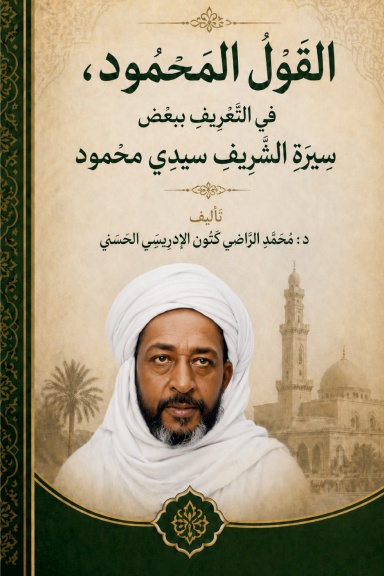
He accompanied Sidi Mahmoud al-Tijani, a descendant of Sheikh Sīdī Aḥmad al-Tijānī, on a journey through several Moroccan cities. He later wrote Ghayat al-Maqsud bi al-Rihla ma‘a Sidi Mahmoud about it.
The Hijazi Mission
He was chosen by the Moroccan government to represent it in a mission congratulating King Hussein on the independence of the Hejaz. He recorded this journey in al-Rihla al-Hijaziyya.
These journeys reveal another side of his personality: he was not only a scholar rooted in Fez, but also an observer of society, a man of letters, and a participant in broader religious and political networks.
His Entry into the Tijani Path
The roots of Sidi Ahmed Skiredj’s attachment to the Tijani path go back to childhood. He used to accompany his grandfather Sidi Abd al-Rahman Skiredj to the Maghrib prayer and to the recitation of the Wazifa in the Grand Zawiya of Fez. After his grandfather’s death in 1311 AH, he continued visiting the zawiya with his father. In this way, he grew up not merely around scholars, but in a living Tijani environment.
He formally entered the Tijani path in 1315 AH, at the age of twenty, at the hand of Sidi M’hammed Guennūn.
Later, he renewed his commitment with major scholars such as:
Moulay Abdelmalik al-Alawi
Moulay Abdullah al-Badrawi
In 1316 AH, he received a general authorization from the noble Moulay Ahmed al-Abdellawi, one of the most important figures in his spiritual development. From him he received teachings, secrets, and profound guidance. A strong bond of spiritual love and brotherhood also developed between him and al-Abdellawi’s son, Sidi Mohammed.
The Golden Chain of Transmission
Sidi Ahmed Skiredj’s spiritual chain in the Tijani path is known as the Golden Chain, because of the loftiness of its transmission. According to the material provided, it connects him to Sheikh Sīdī Aḥmad al-Tijānī through:
Sidi al-Hajj Ali al-Tamassini
Sidi Ahmed al-Abdellawi
This elevated and respected chain gave his authorization a special weight in Tijani circles and anchored his scholarship in a recognized line of transmission.
His First Major Writings on the Tijani Path
In 1318 AH, Sidi Ahmed Skiredj authored one of his earliest major books on the Tijani path:
Al-Kawkab al-Wahhaj li-Tawdih al-MinhajThe Radiant Star for Clarifying the Path
He later followed it with:
Kashf al-HijabThe Lifting of the Veil
These works helped establish his fame among scholars and Sufis. From then on, he became widely known as one of the great literary voices and doctrinal defenders of the Tijani path.
His Love for the Tijani Path
Sidi Ahmed Skiredj’s relationship to the Tijani path was not dry or merely scholarly. It was filled with intense love, loyalty, and poetic devotion. He wrote countless poems praising:
the Grand Zawiya of Fez
the zawiyas of Salé, Tetouan, and Tlemcen
the path itself
its masters
and above all Sheikh Abu al-Abbas Sīdī Aḥmad al-Tijānī
He even composed verses on the walls of the Grand Zawiya in Fez. His literary production in praise of the Tijani path and its founder was immense, and among the works mentioned are:
al-Nafahat al-Rabbaniyya fi al-Amdah al-Tijaniyya
Hayat al-Qalb al-Fani fi Madh al-Qutb al-Tijani
This poetic devotion was one of the defining marks of his scholarship.
His Defense of Sufism and the Tijani Path
Sidi Ahmed Skiredj was one of the most important defenders of the Tijani path in his time. He confronted opponents in mosque circles and through writing, and he authored numerous books refuting objections and clarifying the teachings of the path.
Among the works mentioned in this defense are:
Qurrat al-Ayn
al-Sirr al-Rabbani
Aqd al-Marjan
al-Sirat al-Mustaqim
al-Iman al-Sahih
Kashf al-Balwa
al-Hijara al-Muqtiya
His defense was rooted in conviction, learning, and sincerity. He viewed it as part of preserving authentic Islam and protecting future generations from false accusations and confusion.
His Teachers and Students
Sidi Ahmed Skiredj was shaped by many teachers, especially in Fez and within the Tijani environment. As noted earlier, among his teachers were major scholars of al-Qarawiyyin and masters of the path, especially Moulay Ahmed al-Abdellawi.
He also became a teacher to many students who inherited from him scholarship, discipline, literary culture, and Tijani knowledge. The source material emphasizes that many disciples were formed under his direction and carried on his wisdom and learning. His educational influence thus extended beyond books into living transmission.
His Works and Literary Legacy
Sidi Ahmed Skiredj was an extraordinarily prolific author. The material states that he wrote more than 200 works across many fields. His books and writings cover:
jurisprudence
letters and belles lettres
Sufism
Tijani doctrine
history
biography
poetry
travel writing
spiritual guidance
responses to scholarly inquiries
legal opinions
His letters and fatwas became important references for seekers, scholars, and followers of the Tijani path. Many of his writings were composed in response to real questions from disciples and learned men, which gives them practical value in addition to literary and spiritual merit.
He was also famous for poetry, and used verse not as ornament alone, but as a vehicle for teaching, praise, defense, remembrance, and biography.
His Style and Temperament as an Author
Sidi Ahmed Skiredj combined several rare qualities:
vast learning
strong memory
literary elegance
historical awareness
devotion to sources
spiritual sensitivity
and the ability to write across genres
He was both a scholar and a stylist. He could write jurisprudence, biography, travel literature, doctrinal explanation, devotional poetry, and polemical defense with equal strength. This versatility explains why he remains such an important name in Moroccan and Tijani intellectual history.
His Last Years and Death
Sidi Ahmed Skiredj continued serving in judicial office, writing, teaching, and defending religion despite illness. Diabetes did not stop him from continuing his work or bearing the burdens of service.
He died in 1363 AH / 1944 CE, in Marrakech, after a life of scholarship, devotion, and public service. By the time of his death, he had become one of the most respected figures in Moroccan Tijani scholarship.
His Enduring Legacy
The legacy of Sidi Ahmed ibn al-Ayashi Skiredj remains alive for several reasons.
First, his books continue to serve as essential references for the Tijani path.
Second, his biography represents a model of the scholar who unites outward knowledge, inward discipline, literary refinement, and institutional responsibility.
Third, his defense of Sufism and the Tijani tradition left an enduring mark on later generations.
Fourth, his writings preserve a vast treasury of information on Moroccan scholarship, spirituality, and history.
Finally, his life continues to inspire those who seek to combine piety with knowledge, and scholarship with service.
Why Sidi Ahmed Skiredj Still Matters Today
For anyone researching:
Sidi Ahmed Skiredj biography
Tijani scholars in Morocco
Moroccan Sufi literature
Tijani path history
al-Qarawiyyin scholars
Sidi Ahmed ibn al-Ayashi Skiredj books
he remains an indispensable figure.
He stands not only as a scholar of the Tijani path, but as one of the major Moroccan intellectuals of his era. His family background, education, spiritual chain, judicial service, literary power, and enormous written legacy make him a truly encyclopedic personality in the history of Islamic scholarship.
Conclusion
Sidi Ahmed ibn al-Ayashi Skiredj was a great Moroccan judge, scholar, poet, historian, and spiritual guide whose life was dedicated to knowledge, service, and the preservation of the Tijani path. Born in Fez in 1878, formed by a noble family and the scholars of al-Qarawiyyin, committed early to the Tijani path, and entrusted with major public roles, he produced a body of work that still illuminates the way for students and disciples.
His ancestry gave him nobility, his education gave him mastery, his path gave him direction, and his writings gave him permanence. Through his books, poems, fatwas, letters, and public service, he remains a living presence in the intellectual and spiritual heritage of Morocco and the wider Tijani world.
May Allah have mercy on him, raise his rank, and reward him abundantly for his service to religion, knowledge, and the people of the Tijani path.