Skiredj Library of Tijani Studies
Beauty, adab, certainty, divine remembrance, and spiritual discernment in the Tijani tradition
The Tijani scholarly heritage is rich not only in major doctrinal works and biographies, but also in concise spiritual teachings that illuminate the inner logic of the path. These short passages often explain what the Tariqa truly is, how it should be practiced, how believers should speak about the friends of God, and how to preserve adab in both devotion and doctrine.
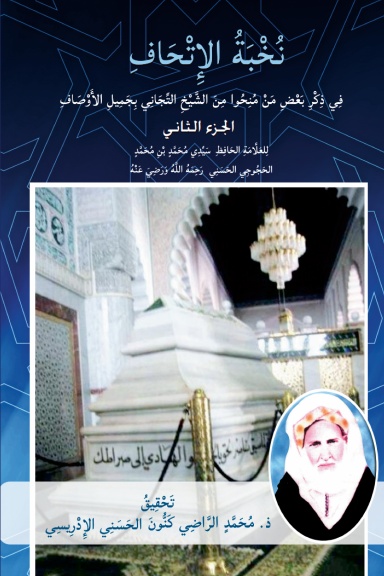
This second installment of Pearls of Wisdom of the Tijani Scholars presents a faithful English rendering of selected teachings from scholars such as Sidi Ahmad Skiredj and other authorities of the Tijani tradition. Each pearl appears here as its own heading so that the reader can reflect on it slowly and clearly.
The Tijani Path Is a Path of Beauty
Our Muhammadan Tijani path was founded upon God-consciousness and divine good pleasure, through what God granted its founder of sincerity in his dealings with his Lord and perfection in his love for the Messenger of God, peace and blessings be upon him.
Its established pillars are the regular observance of the Wird, the Wazifa, and the Friday remembrance after preserving the prescribed prayers in their proper times, fulfilling what has been commanded, and avoiding what has been forbidden according to one’s ability.
As for the miracles of the Shaykh, may God be pleased with him, and the excellence of his path, that lies outside the formal conditions of the path itself. The path in its true reality is remembrance. Whatever is beyond that is either virtue or excess. Virtue should only be mentioned among those fit to receive it, while excess appears when matters are handled by those unqualified for them.
The scholars also insist that Sīdī Aḥmad al-Tijānī did not command his companions to believe anything contrary to the creed of the people of truth. Rather, he instructed them to weigh everything attributed to him on the scale of the Sacred Law: whatever agrees with the law is to be accepted, and whatever contradicts it is to be left aside.
The same scholars explain that the Tijani path is a path of beauty, and that its litanies are all rooted in beauty. They make an exception for certain invocations associated with majesty, whose overpowering effects are not suited to the disciple of this path. This is why the Tijani way is not built on seeking extraordinary effects or spiritual powers. It is not founded on the style of training pursued in some other Sufi paths. Rather, it is a path of gratitude, as is well known among its people.
At the same time, it remains a path of divine openings, stations of excellence, and spiritual unveilings poured upon its companions from the Muhammadan Presence through the blessing of Sīdī Aḥmad al-Tijānī. The scholars even say that his sainthood came so close to being a matter of certainty that it was acknowledged not only by his followers, but by many beyond them as well.
Affirming the Friends of God Is Itself a Form of Sainthood
The scholars state that affirming the friends of God is itself a form of sainthood, and that the one who does so is protected from harm, because he enters the sphere of divine safeguarding and is counted among the people of God.
Whoever truly affirms them has given due recognition to divine lordship and to the vastness of God’s grace. Therefore, if someone finds it excessive that great rewards are promised to the people of this Tijani path, such a person is in fact diminishing divine bounty, which has no limit and no boundary.
The scholars warn strongly against people who rush to object to the friends of God without encompassing all the proofs of the Sacred Law and without mastery of the full breadth of Arabic through which revelation was conveyed. Such a person stands in grave danger, for whoever shows enmity toward a friend of God has been declared at war by God and His Messenger.
They also remark that the friends of God are inwardly united: when one of them is attacked, the others stand with him and the aggressor is cast away from their company. This, they say, has always been the case and will remain so.
A poet expressed the matter beautifully: if your own understanding throws you into destructive abysses, then it would have been better for you never to have “understood” in that way at all.
Yet the scholars do not end with condemnation. They call believers to care even for those Muslims who have not yet tasted the sweetness of affirming the friends of God, by wishing them repentance and divine success. This, they say, is part of the true Muhammadan character: to wish for Muslims what is praiseworthy and salvific.
They conclude with a prayer that God benefit us through all the saints and knowers of Him, for we love them and believe in them, and “whoever loves a people will be gathered with them.”
The Prophetic Basis of Spreading the White Cloth
The scholars mention that it is authentically established that the Prophet, peace and blessings be upon him, spread out his noble cloak for his foster sister when she came among the delegation of Hawazin. They also mention that he spread it for Dihya al-Kalbi when he came seeking Islam. Dihya wept, kissed the cloak, and placed it upon his head and eyes.
This, they explain, is a clear expression of reverence and honor. Since the Messenger of God is our finest example, the disciple may spread a white cloth in reverence for the presence of the Master of existence, peace and blessings be upon him. They go so far as to say that if one were to spread his very forehead or even the blackness of his eyes for such an arrival, that would be fitting.
They quote verses expressing this meaning: had we known of your coming, we would have spread out the very morning of our hearts, or the darkness of our eyes, and made a path across our eyelids so that your passage might be above them.
Do Not Declare the People of Faith Unbelievers Because of Sin
The Prophet, peace and blessings be upon him, said: “Restrain yourselves regarding the people of ‘There is no god but God.’ Do not declare them unbelievers on account of a sin. Whoever declares the people of ‘There is no god but God’ unbelievers is himself closer to unbelief.”
The scholars add that the speech of the friends of God is subtle beyond the understanding even of many learned men, let alone the common people. For this reason, not everyone is fit to answer objections or controversies regarding the saints and the people of spiritual realization.
They cite Imam Malik, who once responded to a man wanting to refute innovators in writing. Malik warned him that if he was not firmly grounded and fully able, he might slip and perish. Such refutation, Malik said, should only be undertaken by someone so well established that the opponents cannot gain an opening against him.
The same principle is applied here: whoever lacks depth, balance, and mastery may enter a debate intending to defend truth, but instead open doors he cannot close. The result may only increase hostility and confusion.
They also quote the counsel of Zakariyya al-Ansari: do not hasten to denounce the speech of a mujtahid or declare him mistaken unless you have encompassed all the evidences of the Sacred Law and all the languages and meanings of Arabic through which the Sacred Law came. Only then may you object. And how far people are from such a station.
Among the Honors Granted to the Tijanis
One of the teachings transmitted from Sīdī Aḥmad al-Tijānī is that his companions on the Day of Resurrection will not stand with the rest of humanity in the general place of waiting. Rather, they will be in the shade of the Throne, in a place set apart for them, and no one will precede them in entering the Garden except the Companions of the Prophet, may God be pleased with them.
When he was asked how they attained such a rank, he replied: “Because of me.”
Sidi Ahmad Skiredj comments that the secret of this lies in the saying addressed to the Shaykh by the Prophet, peace and blessings be upon him: “Your poor ones are my poor ones, your disciples are my disciples, and your companions are my companions.”
From this, he says, it becomes clear that there is a complete spiritual affinity between the Companions of the Prophet and the companions of this Shaykh. Because of that affinity, they are counted among the great ones with God, even if outwardly they may appear to be ordinary people.
What Is Recommended After the Wazifa
The scholars say that when a group of brethren recite the Wazifa together, it is recommended that each one shake hands with the one on his right and the one on his left, following the Prophetic Sunnah.
They also mention that there is no harm in reciting the Wazifa at night, whether because of an excuse or even without an excuse, because of the excellence of the night.
A Response to Critics: Divine Speech Is Not Limited to What Is Between the Covers of the Mushaf
Some critics argue that whatever is not written between the two covers of the mushaf cannot be called part of the speech of God. The scholars answer by asking: where then are the scriptures sent to Adam, to Seth, and to other prophets? Where is the Torah? Where is the Gospel? Where is the Psalms?
They explain that the eternal speech of God is not confined to the revealed books alone, because God is eternally speaking without interruption. His speech is beyond the reach of finite intellects, for what is temporal cannot grasp the true essence of the Eternal. God is exalted in His essence, attributes, and names beyond any likeness. Whatever occurs in your imagination, your Lord is unlike that. “There is nothing like unto Him, and He is the All-Hearing, the All-Seeing.”
A Response to Critics: Why the Friends of God Give Glad Tidings to Their Loved Ones
The scholars explain that when the friends of God give glad tidings to their loved ones, they do so in order that those believers may increase in faith upon faith. Such glad tidings produce statements that delight the believer and provoke the critic.
The first person is opened to their proper meaning. He lowers his head in reverence before them and sees only truth in them. The second is not opened to them at all. سوء الظن becomes a barrier between him and the speaker, so he hears only what confirms his own suspicions.
Had he descended a little from his lofty self-regard, he would have heard what others heard and understood what would have brought him benefit.
The scholars then give an example from Jawahir al-Ma'ani, where the Shaykh said that the Master of Existence, peace and blessings be upon him, told him while awake and not asleep: “You are among the secure, and everyone who sees you is among the secure, if he dies upon faith.” The condition “if he dies upon faith” shows clearly that the promised security is security in the Hereafter, not worldly security in the sense of being spared all earthly difficulties.
They also remind readers that the first condition of the path is the proper performance of the obligatory prayers, and whoever fulfills that has already entered the scope of divine promise.
The critic, however, when he objects to what God has prepared for His chosen servants, is behaving as if divine generosity must be confined to a narrow, measurable standard. But God is exalted beyond the constraining assumptions of limited minds.
A Response to Critics: The Mastery of the Prophet, Peace and Blessings Be Upon Him
The scholars warn believers not to join the faction that refuses to affirm the mastery of the Prophet, peace and blessings be upon him. He himself said in an authentic hadith: “I am the master of the children of Adam, and this is no boast.”
This is not exaggeration but fidelity to the Prophet’s own explicit words.
A Response to Critics: The Possibility of Inspiration for Those Who Are Not Prophets
The scholars remind their readers that divine inspiration is not restricted to prophets alone. God said to Musa, peace be upon him, concerning his mother: “And We inspired your mother with what was inspired.” Yet the mother of Musa was not a prophet. Had she not fully trusted what was inspired into her, she would not have cast her infant into the river in such a grave moment of risk. Her action was based on inspiration, and it proved true according to the divine promise.
They also cite the case of al-Khidr with Musa. According to the presentation here, al-Khidr was not a prophet, yet he acted on the basis of divine inspiration. The Qur’anic phrase “I did not do it on my own command” is taken as evidence that what moved him was a kind of revealed guidance or inspiration. Musa did not deny the principle itself.
The scholars therefore conclude that such inspiration does occur for the saints, and only the foolish deny it. Whoever reads the books of the spiritual masters will find them full of reports of divine address granted to them. They even quote Abu al-Hasan al-Shadhili asking in his great litany for “a witnessing accompanied by direct address.”
They do note that scholars differed over whether inspiration can be considered a binding proof. Many jurists deny that it is legally binding because one cannot fully trust the inward thoughts of anyone who is not protected from error. The Sufis, however, hold that inspiration is authoritative for one whom God has preserved in his outward and inward states.
Still, good adab remains essential. One should neither rush to deny everything nor accept every claim uncritically. The scholars mention the famous account of 'Abd al-Qadir al-Jilani, who once heard a voice from the sky telling him that forbidden things had been made lawful for him. He immediately replied: “Be gone, O accursed one. God does not command obscenity.” The deceptive image disappeared. He was not deceived, because he judged the experience by the criterion of true knowledge.
The Secret of Beginning the Wird with Seeking Forgiveness
The scholars explain that placing istighfar at the beginning of the Wird washes the heart of stains and burdens so that it becomes ready to receive the lights that arise from the remembrances that follow.
Then comes prayer upon the Prophet before the declaration of divine oneness. In that ordering, they say, there is a subtle secret: the prayer upon the Prophet sweeps away the remaining traces of impurity still lingering in the heart, so that the soul becomes prepared to bear what the repeated declaration of divine oneness produces of realities, subtleties, secrets, and knowledges poured from the divine presence through the Muhammadan reality upon luminous spirits and dark bodily forms.
They add that within this arrangement are lofty subtleties and hidden secrets known only to the people of taste, love, and longing.
The Difference Between the خطاب Given to a Prophet and the خطاب Given to a Saint
The scholars distinguish clearly between prophetic revelation and the inspiration granted to saints.
As for the prophet, the communication may come through an angel, without an intermediary, through a truthful dream, or as a direct infusion into the heart. All of that is called revelation and is truly attributed to God. Whoever denies what is known of such revelation by necessity is guilty of disbelief.
As for the saint, what is given is something cast into the heart, bringing tranquility and expansion to the breast. This is what is called inward speech or inspiration. The Prophet, peace and blessings be upon him, said that among the nations before us there were “those who were spoken to inwardly,” and if there is such a one in this community, it is 'Umar. In another narration, they are described as being addressed without being prophets.
This is the difference: revelation belongs to prophethood, while inspiration belongs to sainthood.
The Sunnah of the Prayer Beads
The scholars affirm the legitimacy of the prayer beads by citing early reports.
Safiyya, the Mother of the Believers, reported that the Prophet entered upon her while before her were four thousand date-stones with which she glorified God.
It is also reported that Sa'd ibn Abi Waqqas used pebbles or date-stones for dhikr, that Abu al-Darda' had a pouch of date-stones he used every morning, that Abu Hurayra kept a pouch of pebbles or date-stones for the same purpose, and that Fatima daughter of al-Husayn used a knotted cord in her hand for remembrance.
A report is also mentioned from 'Ali, may God ennoble his face, saying: “Excellent is the instrument of dhikr, the prayer beads.”
Thus, the use of the sibha is presented not as an innovation opposed to the Sunnah, but as something supported by precedent and devotional practice.
The Importance of Salat al-Fatih
The scholars state that Salat al-Fatih guarantees the good of this world and the next for whoever commits to it continuously, but with a valid authorization.
Its outward rank, they explain, is available to anyone who recites it, with permission or without permission, because its transmitter, Sidi al-Bakri, said of himself that whoever recites it once and then enters the Fire may seize him before God. It is also reported that one recitation of it equals six hundred thousand recitations of other formulas.
Yet Sīdī Aḥmad al-Tijānī clarified dimensions of its rank not explained by others. These depend upon the intention of the reciter. A person may recite it without intending any specific spiritual quality, and so he receives general reward, as ordinary people receive general reward for good deeds. But the inner rank and the innermost rank require authorization and knowledge of the specific excellence attached to them. By knowledge of the excellence, the higher degree is obtained, and this is one of the reasons why the worship of the learned person excels.
The scholars therefore warn that no one should presume to transmit this prayer in one of its spiritual ranks without authorization. Whoever does so risks claiming something for which he has no permission, and so places himself among the deprived.
The Difference Between Worship, Servanthood, and Pure Servitude
The scholars distinguish between three related but different concepts.
Worship is the performance of righteous deeds by the servant while seeking reward.
Servanthood is the performance of righteous deeds purely for God, stripped of the desire for reward and devoted to Him alone.
Pure servitude is acting through God. It is the highest of these degrees, and because of this, the station of pure servitude possesses a dominance over all other stations.
This distinction is brief, but profound. It marks the difference between doing good for benefit, doing good for God, and being carried by God in the act itself.
Matters That Require Special Permission
The scholars say that certain matters absolutely require a specific and special authorization, whether from God, from the Prophet, or from the Shaykh, and whether granted in sleep or in wakefulness.
Among these matters is building a zawiya for the recitation of the Wazifa. Such a place should not be established without special permission, for otherwise there may be grave harm and serious deception in it.
Likewise, if the brethren in a town, region, or village wish to begin a public group recitation of the Wazifa in a place where it was not previously established, such a step also requires permission. If they gather without that authorization, the scholars warn of severe danger and harmful consequences, because permission is a protection.
Knowing the One Who Is Truly Sought
Sidi Ahmad Skiredj says: God is higher and more majestic than all, and He is the One sought. Whoever knows what he seeks finds easy whatever he undergoes.
Another line says: Glory be to the One who never disappoints the one who seeks Him; whoever seeks God sincerely finds Him.
The scholars explain that if a deed is done purely for the sake of God, then God accepts it and places receptivity toward it in the hearts of His servants. They also say: whoever serves the Master, the servants themselves serve him.
But how does one advance toward the presence of God? They quote the sacred meaning: “I am with those whose hearts are broken for My sake.” Then they draw a subtle lesson from the Arabic preposition “bi,” a letter marked by kasra. Because this letter is inseparable from a state of lowering, they say God placed it at the beginning of the Basmala to indicate that none advances into His presence except the people of inward brokenness.
How to Be Pleased with the Divine Decree
The scholars address a subtle theological point regarding how one relates to what God has decreed.
They say that unbelief has one relation to God insofar as He creates and brings all things into existence, and another relation to the servant insofar as it becomes the servant’s attribute and state. It is rejected and condemned according to the second relation, not the first. Likewise, one may speak of being content with it according to the first relation, in the sense that one accepts God’s decree and wisdom, but never according to the second relation, in the sense of approving unbelief itself.
The difference is obvious: being content that something has issued from the divine decree does not mean approving that same thing as a blameworthy state in the creature. If that were so, one would have to approve the death of prophets simply because it occurred by divine decree, and this is false by consensus.
They continue: whatever God does not approve cannot itself be approved. God says that He is not pleased with unbelief for His servants. Therefore, no servant may be pleased with unbelief as unbelief. One may only accept the decree insofar as it reflects divine wisdom, justice, and the correspondence of divine will with divine knowledge.
They then quote Ibn 'Ata' Allah: whenever God gives to you, He shows you His kindness; whenever He withholds from you, He shows you His overpowering majesty. In all of that, He is making Himself known to you and turning toward you with His subtle care.
Closing Reflection
These pearls offer a remarkably balanced portrait of the Tijani path.
It is a path of beauty, gratitude, discipline, and law. It honors the saints without abandoning the scale of the Sacred Law. It affirms inspiration while rejecting delusion. It reveres the Prophet’s mastery while warning against recklessness in theological controversy. It values litanies, authorization, humility, and inward brokenness. And it constantly returns the seeker to the central truth: God is the One sought.
In this way, the Tijani scholars teach a spirituality that is both elevated and sober, rich in love yet firm in discernment, full of openings yet anchored in adab. These are not marginal details. They are among the foundations that preserve the inner dignity and coherence of the path.
++++