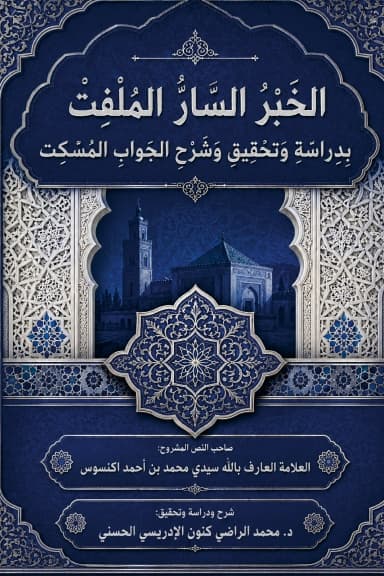
ar
Morocco: the source land and principal home of the Tijani path
Morocco occupies an absolutely central place in the history of the Tijani path. It is the country where Shaykh Sīdī Aḥmad al-Tijānī رضي الله عنه lived a decisive part of his mission, where he passed away, where he is buried, and where his great zawiya in Fez is located, the mother-zawiya of the Tariqa.
For that reason, Morocco is not merely one of the major lands of the Tijaniyya. It is the source country and principal home in which the path became established, structured, rooted, and radiantly unfolded. It is also the country in which the greatest number of the companions of the Shaykh were found, together with those who carried his path, his teachings, his inner meanings, his usage, and his chains of transmission.
These companions were numerous across the cities and regions of Morocco, including:
Fez
Meknes
Rabat
Salé
Tangier
Tetouan
Oujda
Souss
and many other regions.
The decisive witness of Kashf al-Hijab
This reality is powerfully documented in the works of the scholar Sidi Ahmed Skiredj, especially in his major book:
Kashf al-Hijab ‘amman talaqa ma‘a al-Shaykh al-Tijani min al-Ashab
This work, devoted to the biographical notices of the leading figures of the Tijani path who met the Shaykh, contains 207 biographies together with 11 supplementary digressions. Morocco alone accounts for the largest share, with 138 biographies, representing 63% of the total. It is followed by Algeria with 67 biographies, or 32%, then Mauritania with 5 biographies, Tunisia with 4, and sub-Saharan Africa with only 2.
This simple fact is enough to show how Morocco was the principal human environment in which the Shaykh’s teaching was directly received and from which it was later transmitted onward.
Fez: the living heart of that presence
Within Morocco itself, the predominance of Fez is even more striking. According to the geographic distribution provided, Fez alone accounts for 111 biographies, roughly 80% of the Moroccan entries. It is followed by:
Meknes with 6 biographies
Rabat and Salé with 3 biographies
Marrakesh and Zerhoun with 2 biographies each
Taza with 1 biography
and various other Moroccan regions with 11 biographies
This confirms that Fez was not only the city in which the Shaykh lived at the end of his life, but also the principal gathering point of his companions, disciples, and the first great Tijani generations.
The companions of the Shaykh: the matrix of global expansion
These men are the living origin of the path. Among them were scholars, muqaddams, educators, transmitters, and those who later played a role in spreading the Tijani path throughout the world.
From this perspective, Kashf al-Hijab is not merely a biographical dictionary. It is itself one of the fruits of their legacy. It may even be described as a good deed among their good deeds, because it directly emerges from the scholarly, spiritual, intellectual, and social vitality generated by the Tijani zawiya.
A work born from a golden age
Sidi Ahmed Skiredj explains that this book is the product of the scholarly, intellectual, social, and literary awakening that the Tijani zawiya experienced at the beginning of the fourteenth Islamic century. That period was marked by a remarkable flourishing on several levels, especially:
scholarly
cultural
literary
and social
To this must be added the extraordinary spread of the Tijani path in the lands south of the Sahara, where it entered territories that no other path had previously penetrated in such a manner.
Thus, the story of Tijani Morocco is not only the story of a local legacy; it is also the foundation of a global radiance.
The great Moroccan scholars of that golden age
Among the clearest signs of this golden period is the emergence of major scholars and masters of the path, including:
Sidi Ahmed Skiredj
Sidi Muhammad al-Hajjouji
Sidi M’hammed (Fatha) Kennoun
Sidi Ahmed al-‘Abdallawi
Sidi al-Husayn ibn Ahmad al-Ifrani
Sidi al-‘Arabi al-‘Alami
Sidi Muhammad ibn ‘Abd al-Wahid al-Nadhifi
Sidi al-Hasan ibn Abi al-Jama‘a al-Ba‘qili
and many others
Before them, one must also recall Sidi al-‘Arabi ibn al-Sayih in Rabat, together with his disciple Sidi al-Husayn al-Ifrani in the Souss region of Morocco.
All of these great masters contributed to the production of a vast body of writings, responses, teachings, commentaries, and works that gave Tijani Morocco an exceptional doctrinal and literary depth.
The karamat of the awliya contemporary with the Shaykh
Morocco in that period was also marked by many karamat that God caused to appear through some of the great awliya contemporary with the Shaykh, especially among those who were with him in Fez.
Karamat have a firm foundation in the Qur’an, the Sunna, and the consensus of the scholars. They may be understood as extraordinary occurrences beyond the ordinary capacities of human beings, which God manifests through one of His awliya when necessity requires it.
Sidi Ahmed Skiredj recalls several essential principles on this matter:
A karama is not an intrinsic power of the wali; rather, it is an effect of divine power granted by grace. It is not sought for its own sake. It appears when a truth needs to be established, when a necessity must be answered, or when divine support must be made manifest in a given situation.
He also explains that the awliya usually try to conceal such karamat as much as possible, and only allow them to appear when need makes this unavoidable.
He further notes that karamat often reflect the social and human reality surrounding the saint: they differ according to whether one lives in a city or a rural environment, in times of simplicity or complexity, under conditions of knowledge or ignorance, or in contexts of submission or resistance.
Qadam al-Rusukh: linking Skiredj’s time to the time of the Shaykh
In his work:
Qadam al-Rusukh fima li-Mu’allifihi min al-Shuyukh
Sidi Ahmed Skiredj sought to connect his own age and milieu to the age of Mawlana al-Shaykh رضي الله عنه by laying out the chains of his teachers back to the Shaykh.
His highest sanad in the path runs through:
his shaykh Sidi Ahmed al-‘Abdallawi
then the qutb Sidi ‘Ali al-Tamassini
then the Shaykh رضي الله عنه
This point is fundamental, because it shows that for Sidi Ahmed Skiredj, Tijani Morocco was not simply a historical inheritance. It was a living continuity, preserved by chains, upheld by men, and confirmed through authorizations.
Riyad al-Silwan: mapping the extended golden age
In another work entitled:
Riyad al-Silwan fiman ijtama‘tu bihim min al-A‘yan
Sidi Ahmed Skiredj presented the golden age of his own time, when the Tijani path had already spread throughout the world. In that work he mentions major figures of the path both within Morocco and beyond it, among those whom he met, from whom he received authorization, whom he authorized, or with whom he exchanged mutual transmission.
If Kashf al-Hijab is a book of the first origins, then Riyad al-Silwan is a book of the living continuation of those origins in later generations.
Conclusion
Morocco is the source land and principal country of the Tijani path. It is the land where Shaykh Sīdī Aḥmad al-Tijānī lived, where he passed away, where he is buried, where his great zawiya of Fez stands, and where the greatest number of his companions were found.
The works of Sidi Ahmed Skiredj, especially Kashf al-Hijab, Raf‘ al-Niqab, Qadam al-Rusukh, and Riyad al-Silwan, show with great force that Morocco was:
the principal homeland of the Shaykh’s presence
the main reservoir of his companions
the center of a major scholarly, literary, and spiritual revival
and the basis of the global radiance of the Tijani path.
These references are explicitly associated with this region in the documentary world map materials.
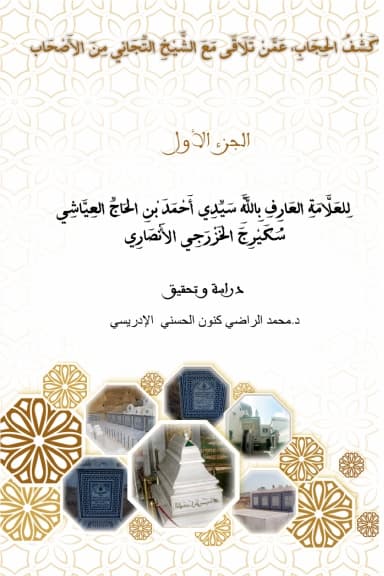
كَشْفُ الحِجَابِ، عَمَّنْ تَلَاقَى مَعَ الشَّيْخِ التِّجَانِي مِنَ الأَصْحَابِ (جزآن)
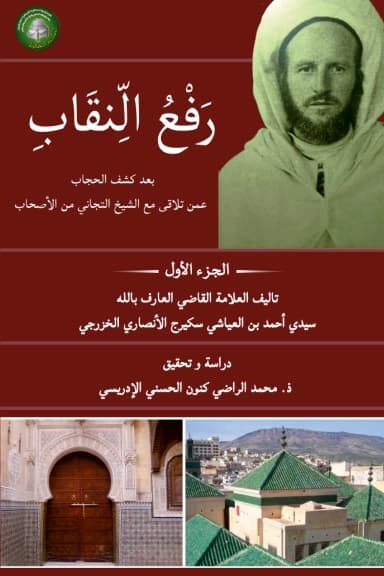
رَفْعُ النِّقَابِ بَعْدَ كَشْفِ الحِجَابِ عَمَّنْ تَلَاقَى مَعَ الشَّيْخِ التِّجَانِي مِنَ الأَصْحَابِ (المجلد الأول)
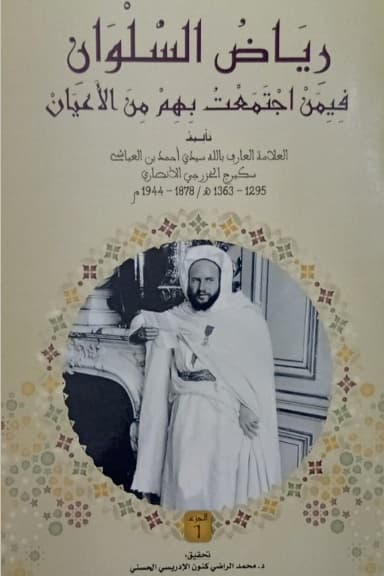
رِيَاضُ السِّلْوَانِ
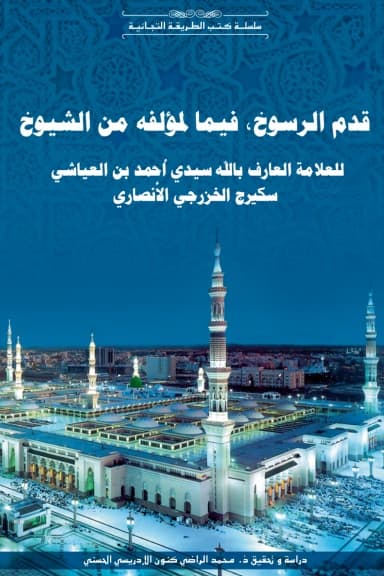
قدم الرسوخ، فيما لمؤلفه من الشيوخ
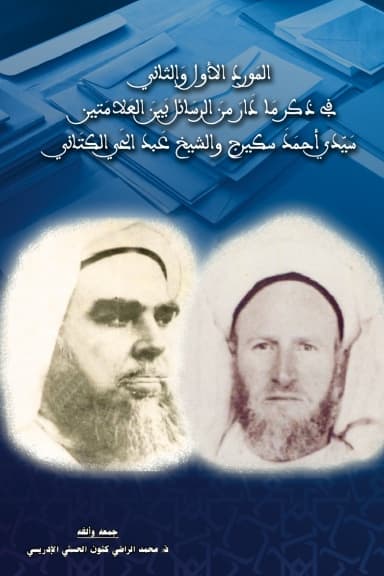
المَوْرِدُ الأَوَّلُ وَالثَّانِي في ذكر ما دار من الرسائل بين العلامتين سيدي أحمد سكيرج والشيخ عبد الحي الكتاني